The ruling Georgian Dream party has introduced a sweeping new legislative package tightening restrictions on foreign funding, political activity, and public engagement for organizations and individuals in Georgia.
On January 28, Georgian Dream’s parliamentary majority convened at the party’s Gorgasali office, with party chair Irakli Kobakhidze present. After the meeting, majority leader Irakli Kirtskhalia presented the latest legislative package, emphasizing its intent to close loopholes in foreign funding restrictions.
Kirtskhalia argued that while foreign financing of “unrest, violence, and revolutionary processes” has become more difficult, some mechanisms to bypass the law persist. “Such loopholes,” he warned, “could jeopardize the peace, stability, and prosperity that Georgia has worked hard to achieve. That’s why we’re introducing new changes to prevent anyone from using alternative means to fund unrest from abroad.”
Amendments to the Law on Grants
Key elements of the proposed amendments include dramatic changes to the Law on Grants. The definition of a grant would be expanded to cover any funds or in-kind contributions—regardless of the parties involved—if those resources are intended or could be used to influence government policy or public opinion. This broad definition also includes resources linked to the interests or activities of foreign governments or political parties.
- Any person or entity wishing to receive such a grant would need prior approval from the Georgian government.
- The amendments also introduce the concept of a foreign legal entity whose activities are substantially related to issues concerning Georgia. Such foreign legal entities—including organizations registered abroad but active in the country—would also require approval before receiving funding. A failure to comply would result in criminal liability.
- The draft further clarifies that grants include payments for technical assistance, such as technology transfers, skills, expertise, or services. For example, if a foreign group hires Georgian experts and pays them, that payment would be classified as a grant and require government approval.
- Finally, if a branch, representative office, or a subdivision of a non-resident legal entity—including a parent organization—receives a grant, it must also secure prior government approval. Receiving such funding without consent would trigger administrative penalties, including a fine equal to twice the amount of the illegally received grant.
Criminal Code Amendments
- Violating the Law on Grants will become a criminal offense, punishable by a fine, 300 to 500 hours of community service, or up to six years in prison.
- Money laundering for the purpose of political activity related to Georgia will be punishable by nine to twelve years in prison, according to an amendment to Article 194 of the Criminal Code.
- Senior officials of political parties who accept foreign funding in violation of the Organic Law on Political Associations of Citizens will also face criminal penalties: a fine, 300 to 500 hours of community service, or up to six years in prison.
- External lobbying is criminalized under the draft: giving money, property, or any advantage to a foreign person or entity in exchange for political activity related to Georgia will be punishable by a fine, 300 to 500 hours of community service, or up to six years in prison.
Amendments on Political Party Membership
- Individuals employed by organizations that receive more than 20% of their income from foreign sources will be banned from political party membership for 8 years under changes to the Organic Law on Political Associations of Citizens.
- The State Audit Office will oversee financial monitoring of party members.
- The amendments will replace the term “declared electoral objective” with “declared party-political objective,” expanding the scope of legal restrictions to any entity with such aims—not just parties.
- Both political party leaders and leaders of entities with declared party-political objectives will face criminal penalties for accepting foreign funding.
Restrictions on Public Political Activity by Businesses
- Business entities, including individual entrepreneurs, engaging in public political activities unrelated to their core business, will now face administrative penalties under new amendments to the Code of Administrative Offenses.
- The State Audit Office will fine business entities 20,000 GEL for a first offense; repeat violations will be fined 40,000 GEL.
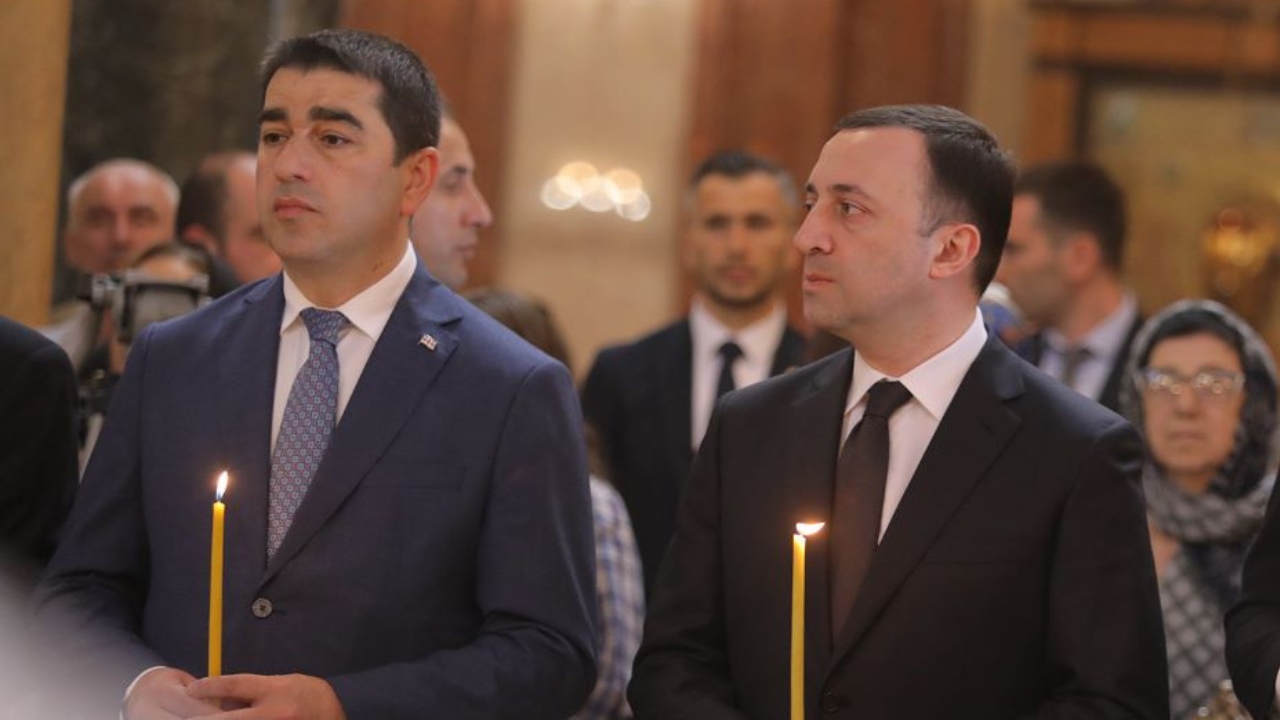
Main photo: Shalva Papuashvili, Irakli Kirtskhalia, and Irakli Kobakhidze attend a Georgian Dream parliamentary majority meeting on January 29. Photo: Georgian Dream’s official Facebook page.
Independent Georgian Media Outlet Radio Marneuli Receives Second Warning Over Foreign Funding