Cover Photo: Mzia Amaglobeli holding a handwritten poster that reads: “Don’t Stop! Don’t Register” (referring to registering as a foreign agent when receiving foreign grants)
The Local Board of the Special Penitentiary Service reviewed Mzia Amaglobeli’s case for conditional early release (parole) and rejected it because she “still does not repent her actions.” The law does not require acknowledgment of guilt or remorse for conditional early release.
Mzia Amaglobeli has been in unlawful detention for almost one year and three months. She was sentenced to two years in prison for slapping Batumi Police Chief Irakli Dgebuadze, under Part One of Article 353 of the Criminal Code of Georgia, which is considered a less serious crime (Article 12);.
Under Georgian law, prisoners convicted of less serious crime may be eligible for early release after serving half of their sentence.
Prisoners’ cases are reviewed by a special commission, officially called the Local Board for the Review of Convicted Persons of the Special Penitentiary Service. The prison administration submits a recommendation for conditional early release.
In Amaglobeli’s case, the Rustavi #5 Women’s Penitentiary submitted a recommendation for early release to the Board on January 12, 2026.
The recommendation highlighted the following:
During her time in the facility, Amaglobeli mainly uses library services and occupies her free time with reading and writing. She has completed an online course in Japanese language. She acknowledges the incident but does not consider it a criminal act.
Interviews with a psychologist showed no tendencies toward emotional aggression, antisocial behavior, or psychological vulnerability. No risk factors were identified.
She is cooperative, visually presentable, communicates easily, and expresses her arguments logically with healthy cognitive and social skills.She has future plans, including addressing health challenges, restoring work capacity, and continuing her professional activity.
She was offered participation in case-management programs but declined at this stage due to ongoing court proceedings. She expressed willingness to participate in psycho-rehabilitative programs after the proceedings are over.
During her sentence, she received no disciplinary sanctions and was twice granted short visitation privileges as encouragement.
She follows the prison schedule, fulfills her duties, and maintains good relationships with other inmates and staff. She is not conflictual and has no prior convictions”.
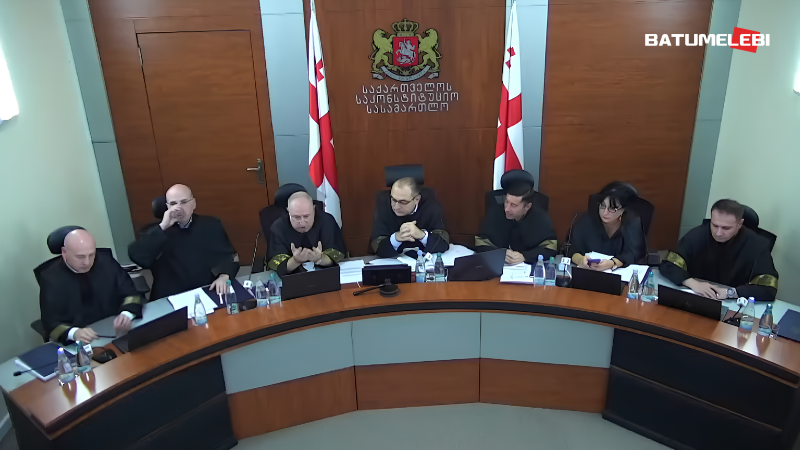
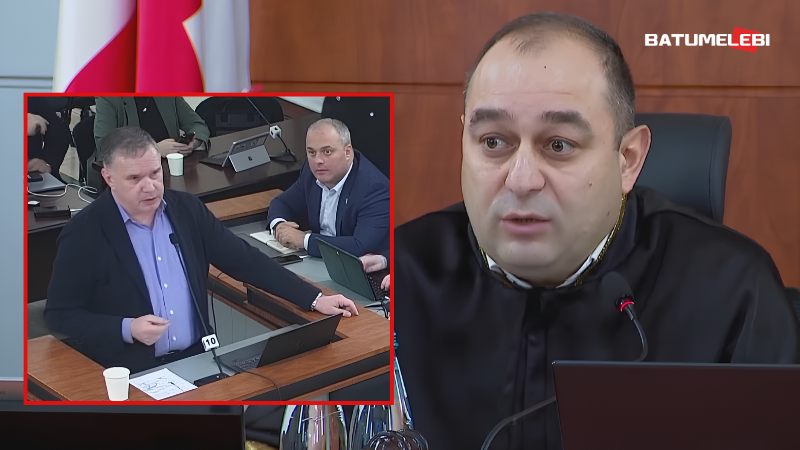
The Board, composed of four members, reviewed the recommendation on March 9, 2026:
Chair:
- Tamar Gelovania (Special Penitentiary Service representative)
Members:
- Marina Kuparadze (Professor, State Medical University)
- Khatia Tadiashvili (Probation Agency)
- David Bughadze (Technical University of Georgia, Justice Training Center)
Despite the positive report from the penitentiary administration, the Board denied early release
The decision stated that incentives applied during the sentence cannot be considered as circumstances justifying release.
“The Local Board, without holding an oral hearing and based on a review of the case materials, concluded that Mzia Amaglobeli’s request for conditional early release should not be granted,” the decision reads.
The decision was delivered to Amaglobeli on March 30.
The board emphasized:
“According to the materials provided by the penitentiary administration, Mzia Amaglobeli still does not repent her actions — that is, she demonstratively maintains the view that her act does not constitute a crime.
She also refuses to participate in social programs offered by the administration for various reasons, which is directly connected to her resocialization process.
In evaluating this criterion, the Board paid particular attention to the fact that, to date, the portion of the sentence served has had no impact on Amaglobeli’s resocialization process.”
The Board further noted that “The purpose of the sentence is the restoration of justice. Justice is restored when the sentence returns a sense of fairness to society and the victim”. Therefore the Board decided that granting conditional early release to Mzia Amaglobeli “would disrespect the many law enforcement officers who uphold the rule of law in the country.”
The Board concluded that the 14 months served by Amaglobeli did not ensure awareness of her actions, protect public safety, or restore justice.
For context: under Georgian law, the Board must consider early release for less serious crime after half of the sentence is served (Amaglobeli’s conviction under Article 353, Part One qualifies). This review is initiated by the prison administration, and does not require the prisoner or her lawyer to apply or consent.
The administration must submit the recommendation as soon as half the sentence is served.
The law does not require acknowledgment of guilt or repentance for conditional early release.
Throughout her arrest and the entire court process, senior officials from “Georgian Dream” publicly demanded that Amaglobeli apologize, express remorse and repent.
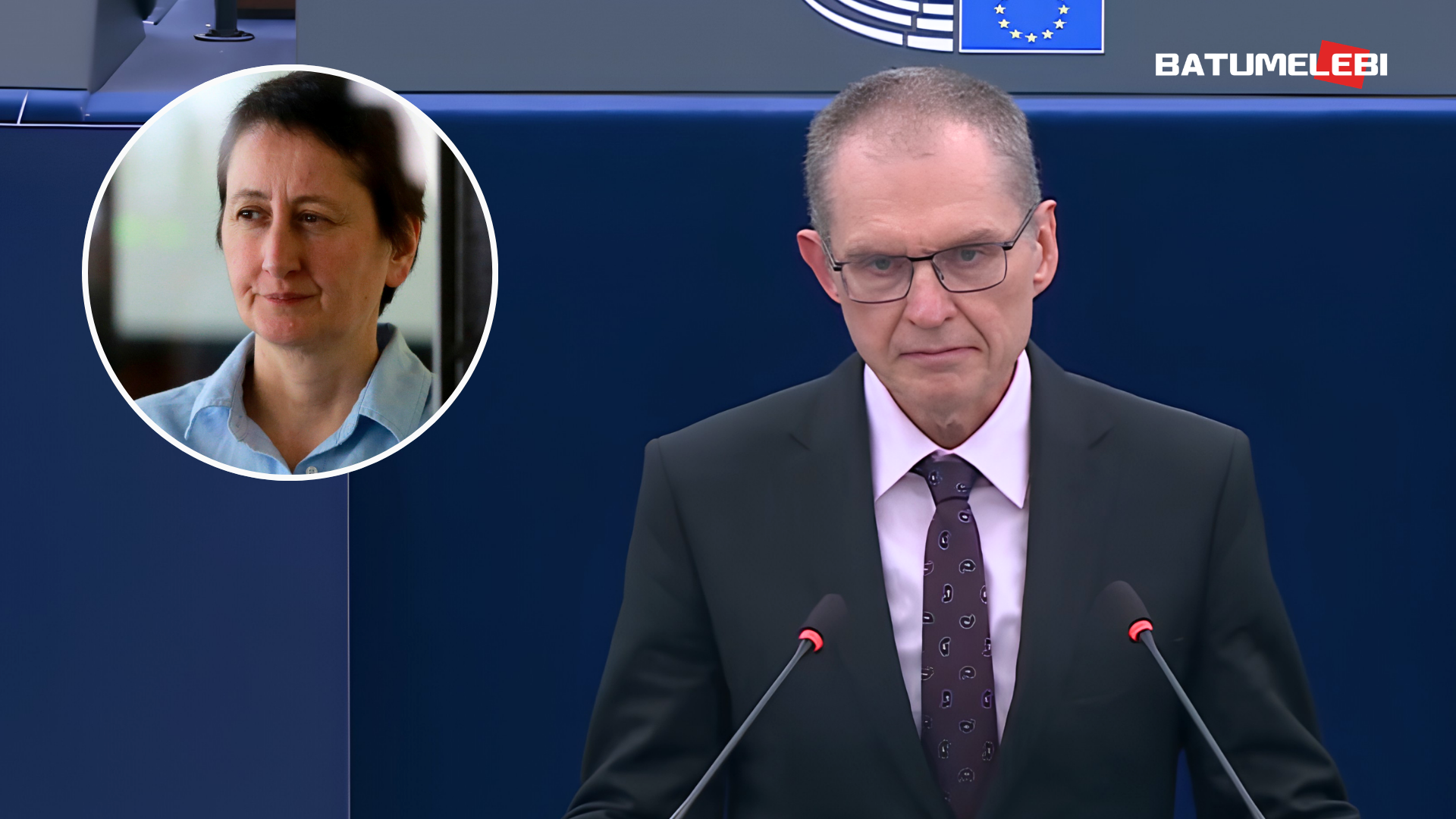
Mzia Amaglobeli is the co-founder of the Georgian independent media outlets Batumelebi.ge and Netgazeti.ge. She is the first female journalist in Georgia to be recognized as a political prisoner since the country regained its independence from Soviet occupation in 1991. In 2025, Amaglobeli, together with Belarusian imprisoned journalist Andrzej Poczobut, was awarded the Sakharov Prize for Freedom of Thought.
Three cases have been brought against her in Georgian courts — two administrative and one criminal — all decided against Amaglobeli. She spent nearly seven months in pretrial detention. During her arrest under criminal law, she was subjected to degrading treatment by the police officer who is presented as the “victim” in the case. During the first 38 days of her detention, Amaglobeli went on a hunger strike, which caused serious deterioration of her health.
As a result, Amaglobeli lost most of her eyesight: she retains only 10% vision in one eye, while the other eye is left with light perception only.
On the same day of Amaglobeli’s arrest, under Dgebuadze’s orders, another Netgazeti journalist, Guram Murvanidze, was administratively detained while covering a protest and performing his professional duties. Despite this, Guram was sentenced to eight days in detention.
Several journalists of Batumelebi&Netgazeti have been fined like many other journalists with the accusation of artificially blocking the road while performing journalistic duties.
A journalist from Netgazeti, Mariam Dzidzaria, is facing up to 15 days of administrative detention after being accused by Georgia’s Interior Ministry of blocking a road while covering a protest, despite clearly displaying press identification.