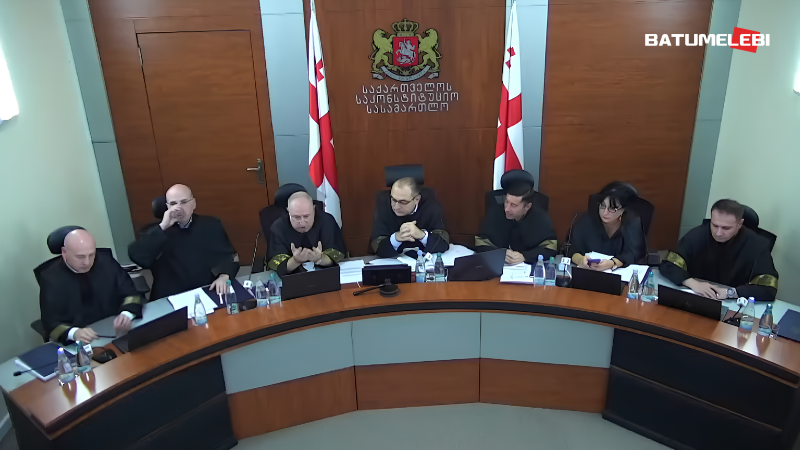
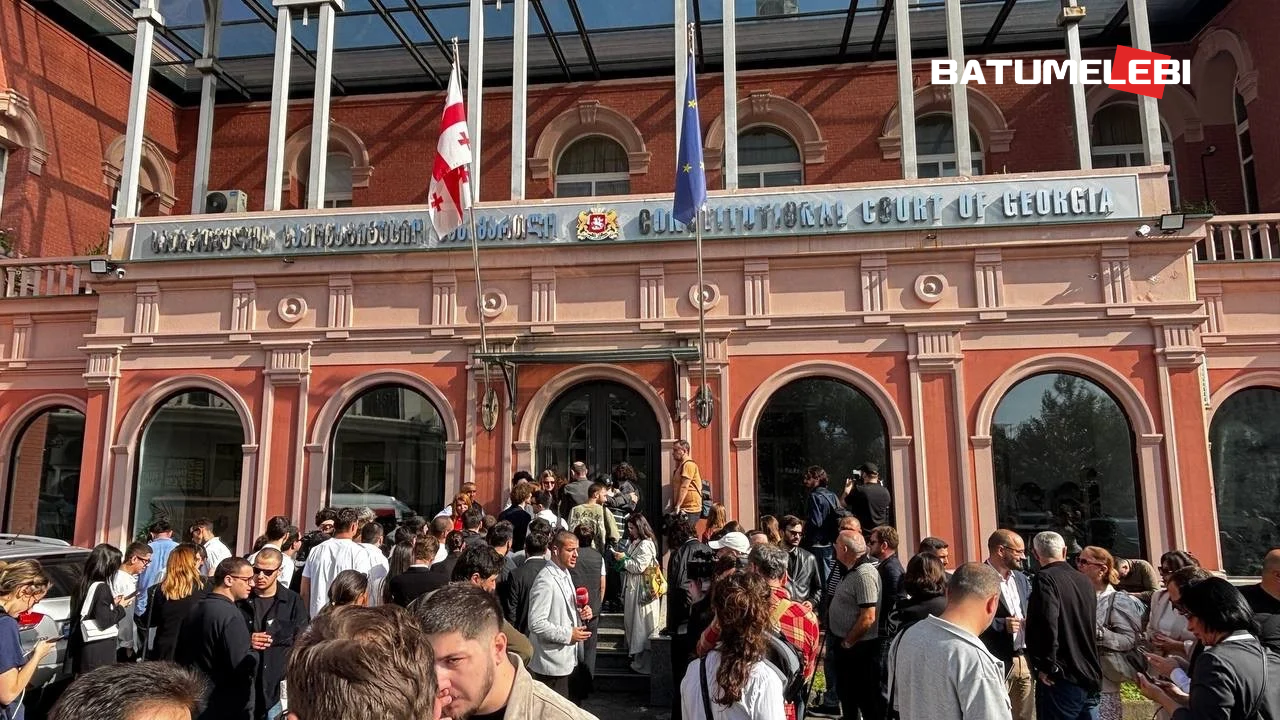
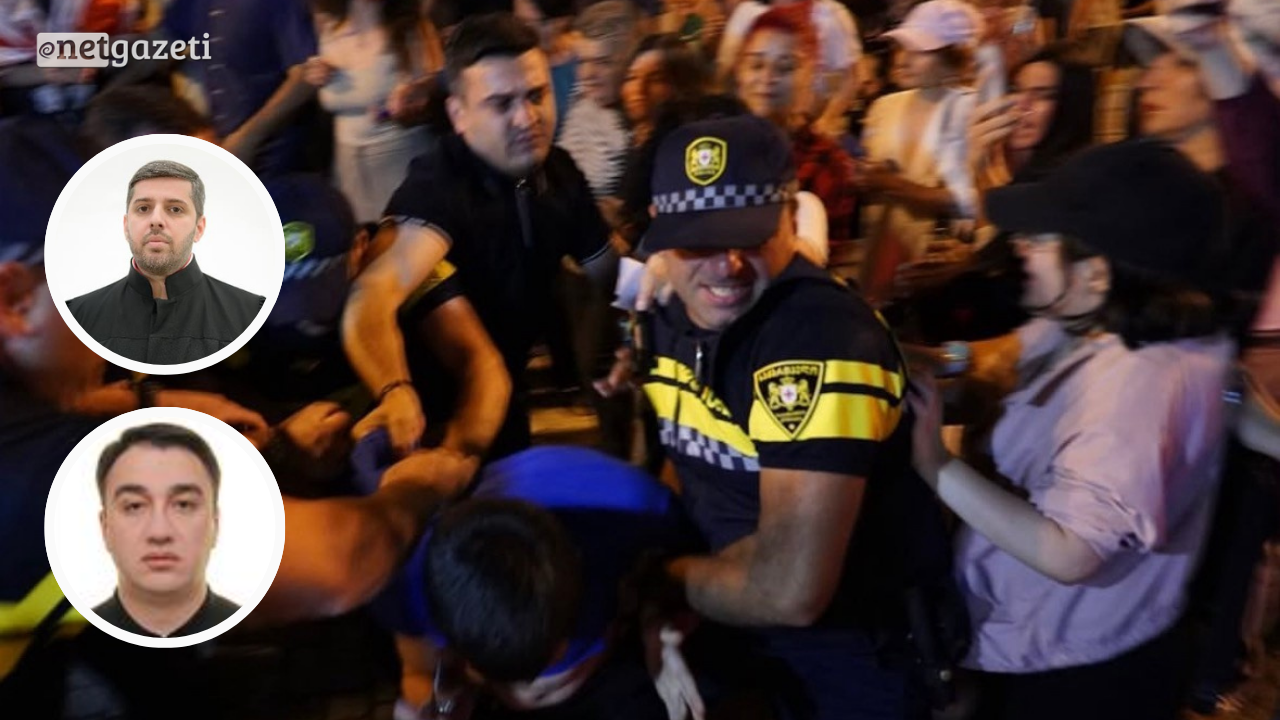
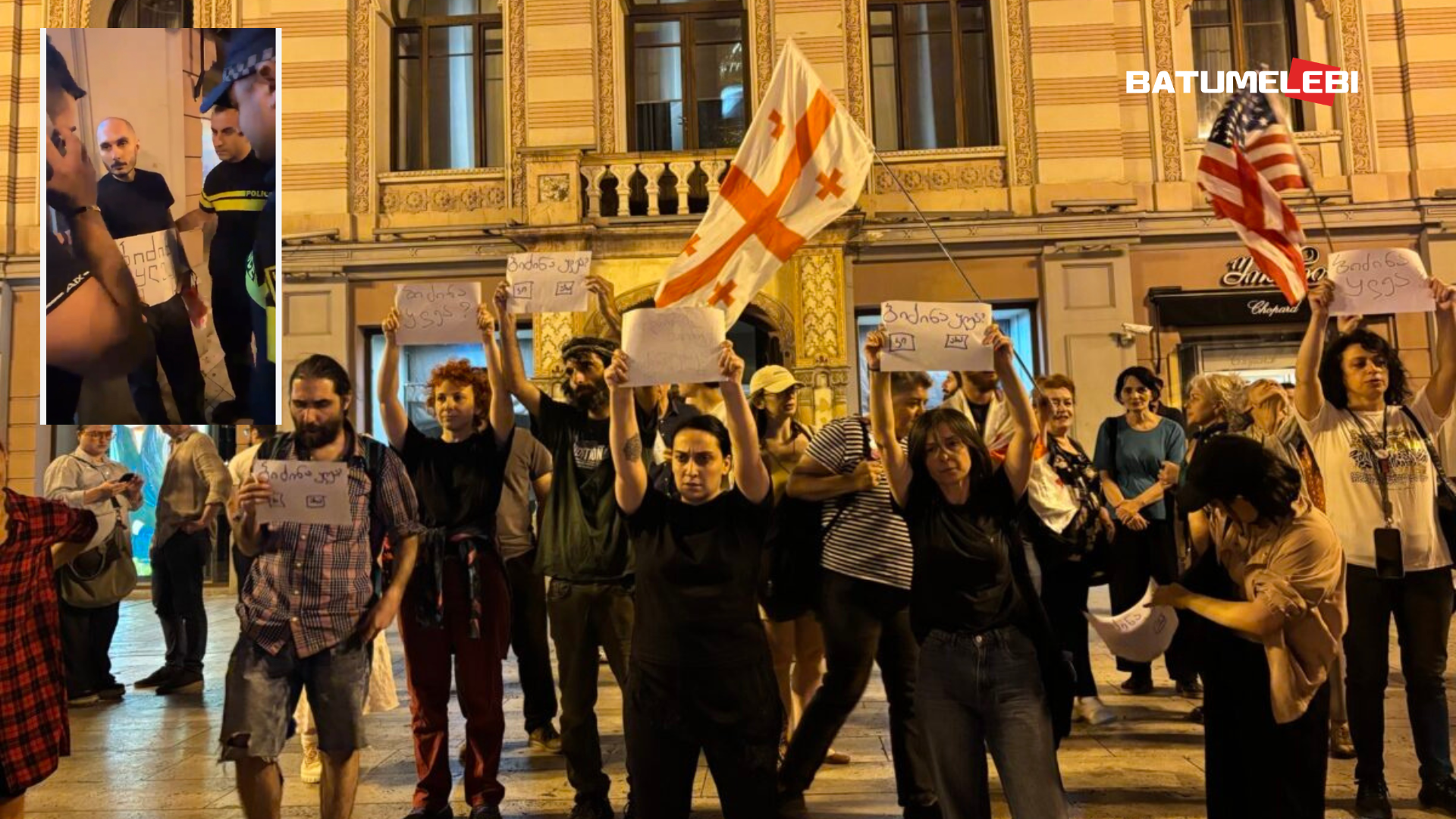
Former Georgian lawmaker Givi Targamadze was released from prison on January 26 after serving a seven-month sentence for refusing to appear before the so-called Tsulukiani Commission, established by the Georgian Dream–controlled parliament to “investigate crimes of the previous government,” a process critics say is being used to justify the banning of political parties.
Speaking to journalists after his release, Targamadze said his freedom was overshadowed by the fact that many others remain behind bars. “I would have been happiest if I were the last to leave prison,” he said, adding that those still detained have already proven their resilience and deserve, above all, good health.
Targamadze described imprisonment of dozens of protesters, journalists and opposition politicians as “the price of fighting for freedom,” stressing that society must not retreat despite repression. He warned that halting resistance would only raise the cost, pointing to Iran and Ukraine as examples:
“This is the price of fighting for freedom, and it’s not easy. Sometimes it’s even tragic. But fortunately, the price we are paying now is not irreversible, whether it’s two years, one year, several months, or even days in prison. This is the price right now. What’s important is that people are not refusing to pay it and are not stopping. Because if we stop now, that price will automatically rise – to the level we see today in Iran, and even more so in Ukraine. So this price must be paid, unfortunately, no matter how heavy it is”.
Asked about his political future, Targamadze said he is ready to contribute “wherever needed,” though he does not currently represent any party leadership. He said he plans to share ideas through consultations, including with opposition figure Zurab Japaridze.
Targamadze also criticized the legitimacy of the Tsulukiani Commission, calling it cynical to summon him while he is a key witness in the case against Russia at The Hague. He noted that during his imprisonment he was held in proximity to individuals connected to the 2016 car bombing attempt on his life. He described the situation with a note of irony:
“I had to spend time in a rather original environment, as you can imagine. Below my cell was a man serving a sentence for attempting to assassinate me – the person who blew up my car. Nearby was someone who, back in the day, worked in the State Security Service and helped block the investigation into that bombing. Later, others joined us – Romeo Mikautadze, Juansher Burchuladze, then Grigol Liluashvili. And finally, even my ‘neighbor’ Irakli Garibashvili couldn’t wait – he could have waited until February, but wanted to feel closer to me, so he became my neighbor here (in prison) for a while. We’re not kept in the same space for long, but that’s fine… Now I’ll hold the line on the streets, and he’ll hold the line in here,” Targamadze said.
Targamadze noted that despite years of threats, arrests, and political pressure, he remains committed to continuing the fight “for freedom, for our families, and for our country.”
The former MP survived that assassination attempt just days before the 2016 parliamentary elections, though five bystanders were seriously injured. While the authorities identified the alleged perpetrator, the organizers of the attack were never officially named.
The high-profile bombing of Givi Targamadze’s car occurred just days before the 2016 parliamentary elections, near the United National Movement’s office. At the time, Targamadze was a leading figure in the party and a member of parliament. He had just left the party office and entered his Skoda vehicle with his driver when, seconds after the car started moving, an explosive device planted in the rear of the vehicle was detonated remotely.
Targamadze and his driver miraculously survived, suffering only concussion and minor injuries, as the blast wave was largely absorbed by the rear of the car.
Five pedestrians were seriously injured in the explosion, one of them critically.
Shortly after the blast, the Interior Ministry and the Prosecutor’s Office declared the case solved. According to investigators, the direct perpetrator was former Interior Ministry employee Darcho Khechuaishvili, who fled the scene and was later sentenced in absentia to 18 years in prison. Prosecutors released surveillance footage showing Khechuaishvili following Targamadze.
Khechuaishvili’s relative, Boris Chagunava, was arrested on charges of aiding and abetting and illegal possession of weapons; he later entered into a plea agreement.
Targamadze accused Russian special services and the then-government of Georgia (Georgian Dream)of orchestrating the attack to destabilize the country ahead of elections. The authorities, for their part, claimed the explosion may have been a provocation benefiting the opposition. The investigation never identified those who ordered the attack, focusing only on the alleged perpetrator.
In September 2024, it was reported that Darcho Khechuaishvili, who had been wanted for years, was detained for illegally crossing Georgia’s border after entering the country from Russia.
Opposition Leader Giorgi Vashadze Leaves Prison After Serving Seven-Month Sentence