“Azerbaijan is not a “bite-sized target” for Russia — there’s the Turkey factor,” says expert on Turkey Kamran Osmanli, who believes that if Russia finds time for military provocations in the South Caucasus, it will be met by an already active Turkey in the region.
Armenia and Azerbaijan have turned their backs on Russia in the South Caucasus. So, what role is Turkey gaining in the region, and what changes for Georgia if it remains in Russia’s orbit? Batumelebi spoke to expert on Turkey Kamran Osmanli:
- Mr. Kamran, what role is Turkey acquiring in the region now, as Armenia and Azerbaijan are trying to distance themselves from Russia’s orbit?
Turkey has long sought to become a decisive factor in the region. Maybe not indispensable so, due to its limited resources, but we are seeing it engage more actively in this process.
You could say Turkey is playing a mediating role between Armenia and Azerbaijan: if you look closely, there is very little time between Aliyev’s and Pashinyan’s visits to Turkey — meaning Turkey held consultations first with one side, then with the other.
- How seriously does Russia take Turkey’s growing involvement in the Caucasus, considering that Russia may find time to resort to its usual tactics and provoke military conflict?
Yes, Russia always tries that. It has managed to keep countries in this region within its orbit through provocations until now.
From Russia’s point of view, Azerbaijan may seem like a small country — but it’s not a “bite-sized target” at this stage. First of all, Russia is fighting — and not successfully — in Ukraine. It doesn’t have the resources to launch a separate military campaign in the Caucasus. Second, there’s the Turkey factor, and I am confident that Turkey would not allow such a move.
After the end of the Karabakh war, Azerbaijan and Turkey signed the Shusha Declaration, which essentially reflects NATO’s Article 5 principle: if one country is attacked, the other is obligated to activate its military component and intervene.

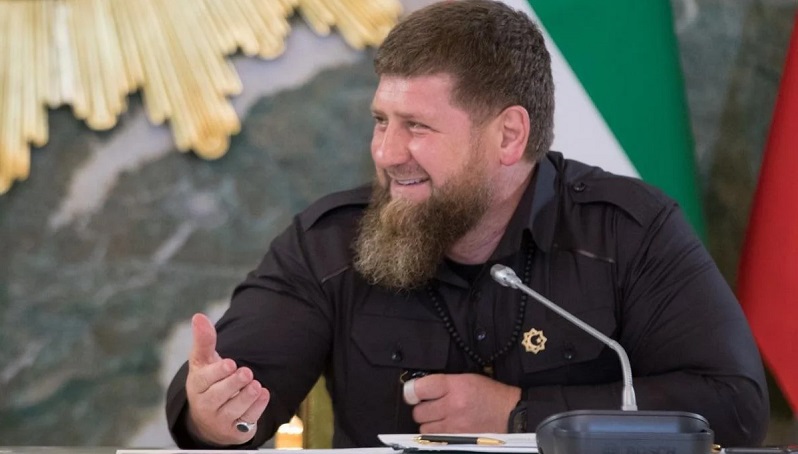
Kamran Osmanli
- Who will protect Armenia? We’re also hearing that Russia is adding more troops to its base in Gyumri.
Yes, Armenia is left vulnerable, facing its former ally alone. A scenario similar to what happened in Abkhazia is possible — although Armenia doesn’t have separatists, there are many within the population who remain loyal to Russia.
It would be unfortunate if that were to happen.
- If that happens, would Turkey turn a blind eye, even though it aspires to be a regional leader?
Turkey’s interest lies in regional peace and stability. It has come forward with conflict-resolution initiatives in Syria, Ukraine, and elsewhere.
Turkey does not have the tools to stop Russia or any other state from acting on Armenian territory.
But if Azerbaijan is attacked, or if something happens in Georgia — Turkey could get involved. Georgia hosts critical transit routes that are directly in Turkey’s interest: an oil pipeline, a gas pipeline, and the railway leading to Kars. Therefore, Turkey has serious interests and investments in both Azerbaijan and Georgia. But in the case of Armenia, I believe Turkey will limit itself to issuing statements.
- Pashinyan traveled to meet Erdogan. There’s talk that Erdogan might visit Armenia. Do you see a real prospect for deepening Armenia–Turkey relations?
There is no official information yet on Erdogan traveling to Armenia. If that happens, it’ll be interesting to see how the local population receives him.
When Pashinyan visited Turkey, he met with local Armenians and clergy — it sparked discussions. That’s significant because in Yerevan, Pashinyan is at odds with the Catholicos (head of the Armenian Church). It’s not unthinkable that he might bring clergy from Turkey who are more loyal to him.
If Armenia truly wants to leave Russia’s orbit, it must take steps to normalize relations with Turkey and Azerbaijan. If Armenia doesn’t open its borders with these two countries, it won’t be able to develop and will remain a kind of Russian province — entirely dependent on Russia, isolated.
So, this necessity must be recognized both by society and the government — they need to move toward reconciliation.
Until Armenia and Azerbaijan sign a peace agreement, any talk of new projects or progress is premature. The media is full of reports claiming agreements are already in place, that the U.S. companies are entering, and so on. But in reality, nothing concrete has happened yet.
- Some argue that Turkey is not actually ready for regional leadership: its economy is weak, democratic backsliding is severe, Erdogan has cracked down on the opposition and jailed critics — meaning it won’t have Western support in this process.
Turkey is very eager to become a regional leader. At the same time, its Achilles’ heel is the economy — which is indeed very weak. In the end, it all comes down to money, despite Turkey’s strong military capacity, army, and defense industry. In recent years, Turkish weaponry has been used successfully in many conflicts.
Turkey’s internal crisis does affect Erdogan’s standing — but ultimately, geopolitics is what matters most. From a geopolitical standpoint, the EU and each of its member states currently need Erdogan.
In addition, Erdogan is close to Trump and his inner circle — and this is evident from their statements. Trump has said Erdogan is his friend and capable of resolving conflicts. We can say he even left the issue of Syria–Israel on Turkey.
So despite Turkey’s internal turmoil, both the Trump camp and the EU are betting on Erdogan. The West sees what’s happening in Turkey — statements are being made — but if all this had occurred 10 years ago, Turkey would’ve faced serious sanctions and pressure. Today, though, with the war in Ukraine on one side, turmoil in the Middle East on the other, and the Armenia–Azerbaijan issue in the region, the West needs Turkey as a strong, reliable partner — regardless of its domestic problems.
So whether we like it or not, Erdogan is what they call a “political animal” — he senses the situation both inside and outside the country and knows how to use it to his advantage. He could have arrested Imamoglu five years ago — but he didn’t dare. Today, however, he did — along with 104 members of the opposition party.
Turkey has already established itself as a strong regional power. Its economy may not be thriving, but it is already a key player — one without whom conflict resolution is almost impossible. At negotiating tables, other countries now request Turkey’s presence. That didn’t happen before.
- What kind of strategy should Georgia adopt now? How might Turkey–Georgia relations change if Turkey becomes the regional leader, while Georgia remains Russia’s agent?
I don’t think Turkey will change its attitude toward Georgia, because relations between the two countries are very close. Turkey’s growing strength is good for us — we have a strong relationship with Turkey. Turkey recognizes our territorial integrity, supports us, and so on.
Georgia’s central government must take care to preserve the trust and interest that a regional power like Turkey has shown toward it.
Experts say Georgia is losing its strategic role. My view is this: if there is peace in the Caucasus, everyone benefits. Cargo from China will still need a corridor — the Silk Road. What’s essential is for Georgia to have functioning infrastructure: roads, railways, highways, ports.
What’s happening now in the Caucasus will take years to resolve. It will take at least 5–10 years to settle the Zangezur Corridor issue. There’s still deep distrust between local populations. So it won’t all be resolved quickly. We are a bridge on the route to Central Asia.