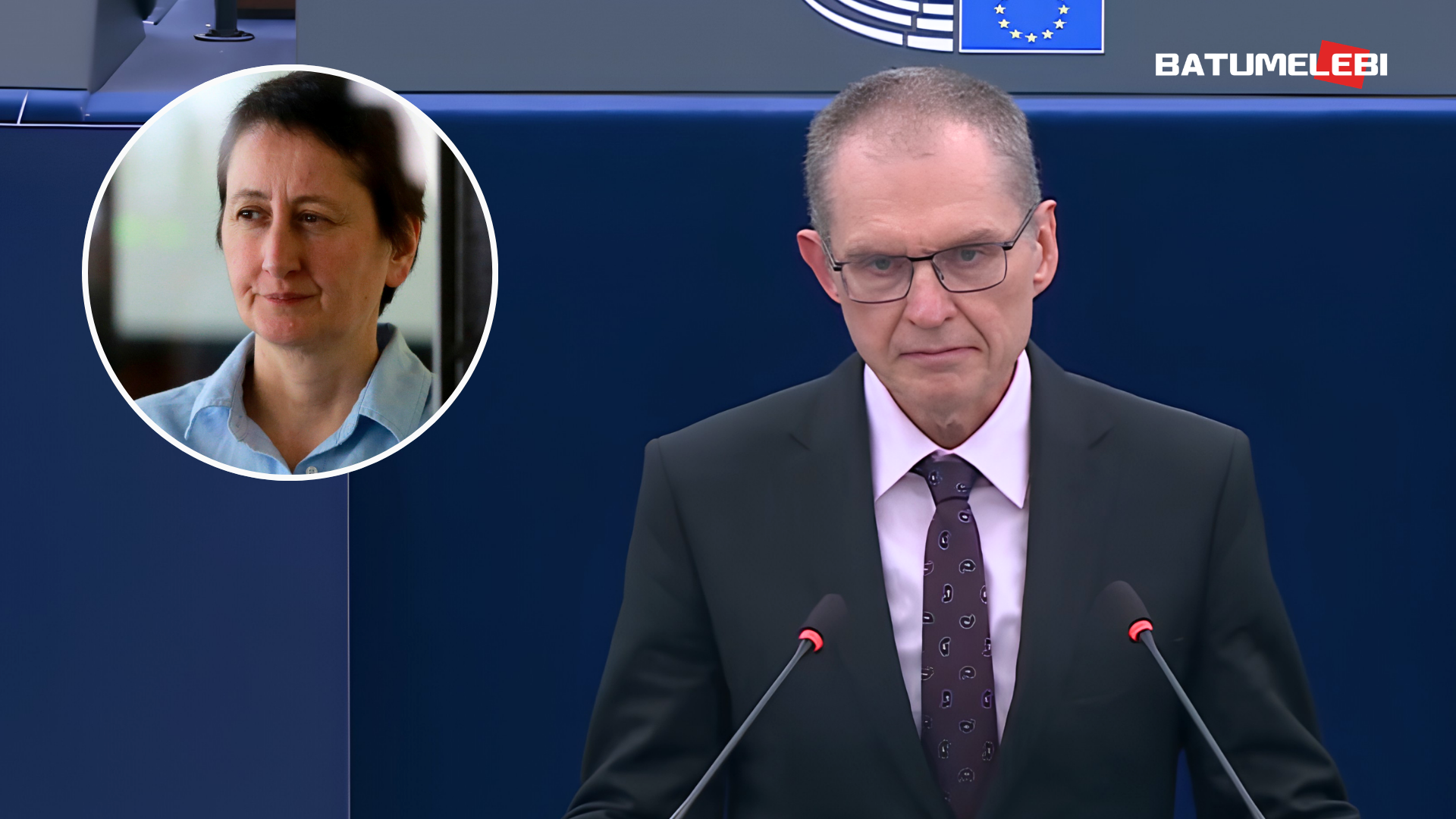
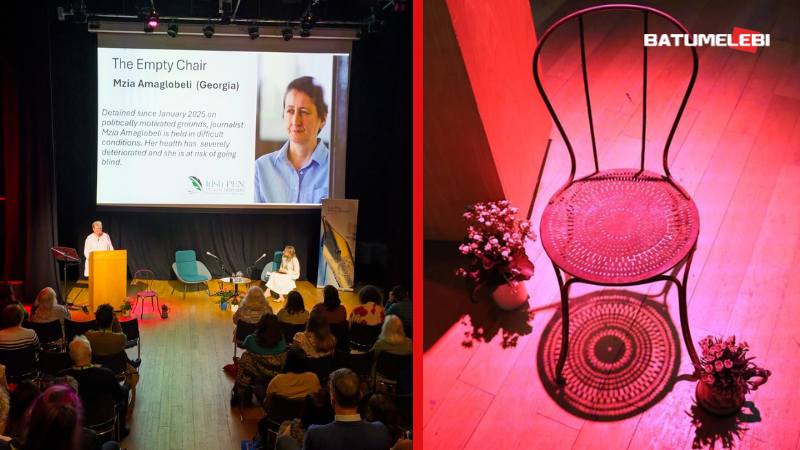
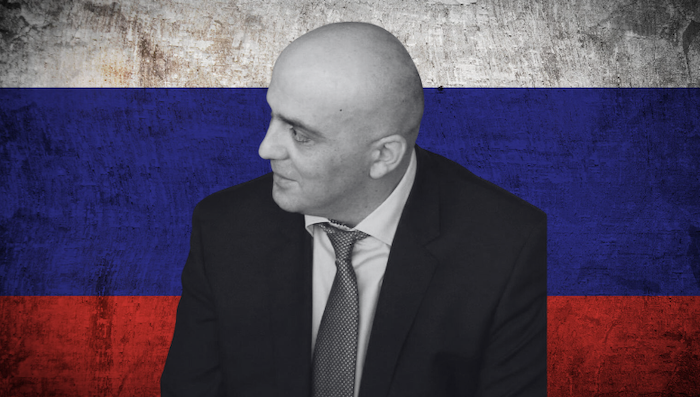
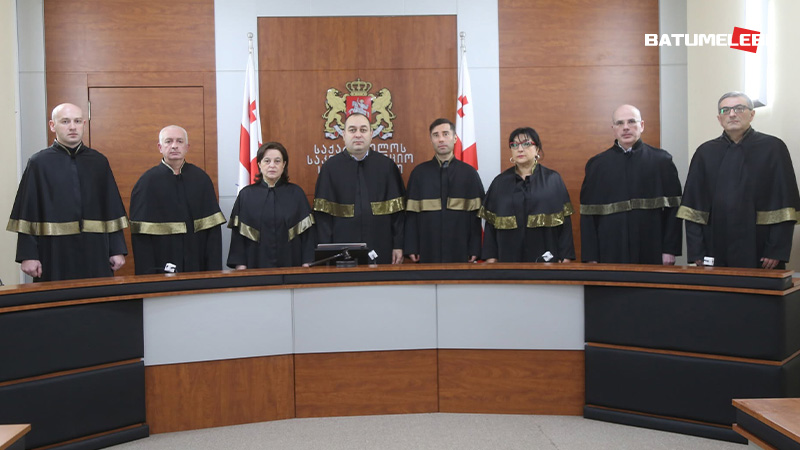
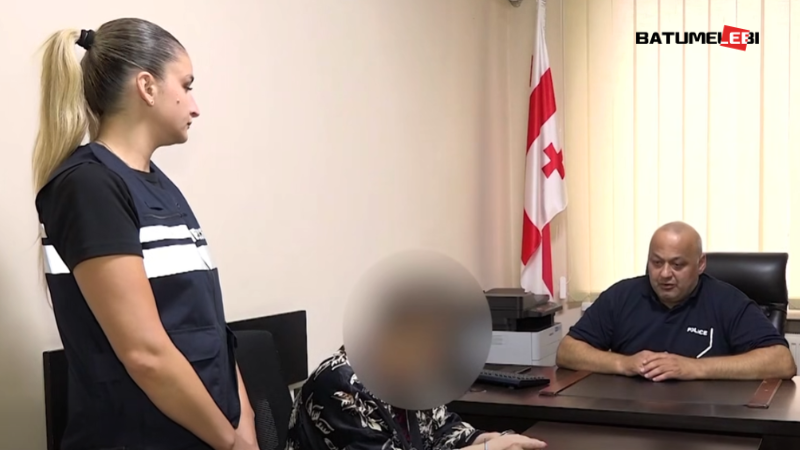
“This is a case of systemic illegality, systemic violence. This is a case of police retaliation, a case of whitewashing the system’s unlawful actions. At the same time, it is a case of police revenge,” said Maia Mtsariashvili today, on November 18, during Mzia Amaglobeli’s ongoing hearing at the Kutaisi Court of Appeals.
At this moment, the lawyer is delivering her closing argument.
“In the case of Mzia Amaglobeli, prosecutors’ every witness/police officer stated that the slap to Dgebuadze was, in fact, a slap to all of them — and that they all remain insulted to this day.
The so-called victim, Dgebuadze, feels insulted; the then-director of the Adjara Police Department, Beselia, feels insulted; and the entire government feels insulted — because, according to them, Mzia Amaglobeli sought to discredit the police.
Therefore, in reality, what we are seeing here is a case built on the wounded pride of the police and of Dgebuadze.
Accordingly, this case has nothing to do with a criminal offense — not with attack, nor with resistance.
This so-called case of ‘whitewashing systemic illegality,’ of ‘systemic revenge,’ was investigated from the very first day by the system itself — the police.
Your Honors,
Do not assume that a police officer’s sense of being ‘insulted’ is rightful, understandable, or natural.
In reality, behind this so-called ‘insulted police’ lies an attempt to cover up and whitewash unlawful acts committed by the police themselves — acts of official falsification. Because after all, they would hardly punish themselves.
And so this manipulated case was created — a case that has already cost Mzia nearly a year of her life and her eyesight.
The process of manufacturing the charges.
Today I am not only speaking about the charges and the verdict — I am also speaking about the very process that created those charges and that verdict.
The prosecutor said we should look at the broader picture and the context.
I will point you to that context — based solely on facts and evidence. It is worth noting that both the prosecution’s appeal and its closing arguments were based entirely on the prosecutor’s interpretations and opinions, unsupported by any evidence whatsoever. Not a single piece of evidence was cited.
How do you hide and whitewash systemic illegality?
You must manufacture “proven guilt” and designate someone as the “culprit”.
This is exactly how Mzia Amaglobeli was cast as the “criminal” – first as the attacker, and later as someone who resisted the police. What does it matter — as long as the “victim” is the police and not Mzia?
This is how the victim was turned into the perpetrator,” said Maia Mtsariashvili.
Mzia Amaglobeli’s lawyer then reviewed in detail the events of January 11–12 and recounted chronologically how everything began.
“Mzia Amaglobeli was not a participant in the protest. She went there only after learning that her colleague (Tsiala Katamidze) had been detained. She asked Tamar Tzulukidze, a representative of GYLA, to go to the scene and check on her. (The court removed Tzulukidze from the witness list.)
On January 11–12, 2025, at the protest outside the Batumi police building, police carried out unlawful and violent detentions of peaceful demonstrators — some for putting up stickers, some for simply asking why others had been detained. (The court removed those detainees from the witness list — Tsiala Katamidze, Gafar Ilmaz, Vazha Darchia, Goderdzi Frangishvili, Teo Beridze, Malkhaz Iremadze.)
This is the context, in short. Do you know what ‘context’ the prosecution was talking about? Perhaps the very context they themselves made sure to remove.
When Mzia arrived, all the so-called “offenders” were already detained. The protest had practically ended; only supporters and family members remained. (The court removed the detention reports because the file contained no documentation of who was detained when, who the last detainee was, or how long the protest lasted.) According to the reports, all of the detainees were calling unnamed police officers ‘dogs,’ ‘pigs,’ ‘servants of Russia.’
Mzia put up a sticker — and they detained her.
There is video of this. And this is where the unlawful acts began — unlawful acts that this criminal case now seeks to cover up. The investigation not only failed to attach this video but motioned for it to be excluded. The court fully ignored it in the verdict.
She was detained unlawfully, without any legal grounds — a violation committed personally by a high-ranking police official. The video, the report, the administrative offense protocol — none of it was examined by the court.
To justify the unlawful actions of this high-ranking official, Mzia had to be charged administratively, supposedly for insulting the police.
Then it turned out this was not enough. They added to the protocol that she had resisted arrest. No one knows whom she allegedly resisted or when — but the administrative court accepted it just like that.
Next, they needed “evidence” for the administrative proceedings, so Batumi police submitted a video that shows no resistance at all (but stampede), and which was filmed after Mzia had already been released from unlawful detention.
The prosecution did not dare say this aloud in court… but the court did.
Then they needed to ensure that Mzia’s complaint about her unlawful detention was never examined. So they reassigned it to Grigol Beselia — again — and it is still formally “under review.” They ridiculed Mzia. The verdict did not mention this either.
Then they needed criminal charges against Mzia — because Irakli Dgebuadze had threatened her: “I will have you imprisoned on criminal charges,” and indeed, she was imprisoned.
Then they needed to erase all internal video recordings from inside the building (showing violence against Mzia) — and they erased them.
The court excluded all of our correspondence with the Special Investigation Service — every document showing that the agency did nothing to investigate or secure the video footage.
Then they needed to ensure that the patrol police officers who were present had their body cameras switched off — and they did.
Then they needed to erase perimeter camera recordings showing how police assaulted those detained, including Mzia and others, including the two bothers – Gabaidzes. The prosecution erased these videos; the Ministry of Internal Affairs refused to give them to us, claiming they “could not be found.”
Next, they needed to erase the recordings from Adjara TV, which was broadcasting live (its cameras are visible at the scene in our videos). They trimmed the footage and submitted only 44 seconds to the case file.
The defense was also misled — a court order was included into the case granting access to all footage of that night, but in the end only 44 seconds of video existed. The prosecution has still not answered for this, nor has the court.
By erasing Adjara TV and other recordings, they erased the evidence showing that only minutes before her detention, police trampled over Mzia Amaglobeli — knocking her to the ground, where she briefly lost consciousness and lost one of her shoes. (The prosecution confirmed this incident because our video exists — and because it serves them to agree that Mzia had injuries that needed an explanation.)
The state prosecutor claimed that Mzia was trampled because the protest “became unlawful,” which is a lie.
At the moment she was trampled, the protest was no longer underway, nor had it become unlawful.
How does the prosecution counter our evidence? With nothing. No concrete evidence was cited — nor can they cite any.
I have a well-founded suspicion that Adjara TV had even clearer footage of the unlawful and violent detention of Mzia and the Gabaidzes — which is why Adjara police did not seize it.
Then they needed to erase our 19 video pieces of evidence — and they did. They were excluded.
Later the Appeals Court accepted them as admissible. And these were key pieces of our evidence.
Then they needed to erase them again, and even with the appealed verdict, they disappeared once more – the court simply ignored them. Yes, we discussed these videos, presented them, showed them — but there is no mention of any of them in the verdict. The court stated that only the 44-second video exists and that it supposedly has priority over all other evidence.
Why do our videos not have priority over the police officers’ false testimonies?
Then they needed to explain away Irakli Dgebuadze’s threat (of imprisoning Mzia under criminal charges) — and they had him explain it as: ‘I was merely explaining legal qualifications to my colleagues.’ A mockery,” said Maia Mtsariashvili.
The appellate hearing in Mzia Amaglobeli’s case is ongoing at the Kutaisi Court of Appeals. The lawyer is delivering her closing remarks.