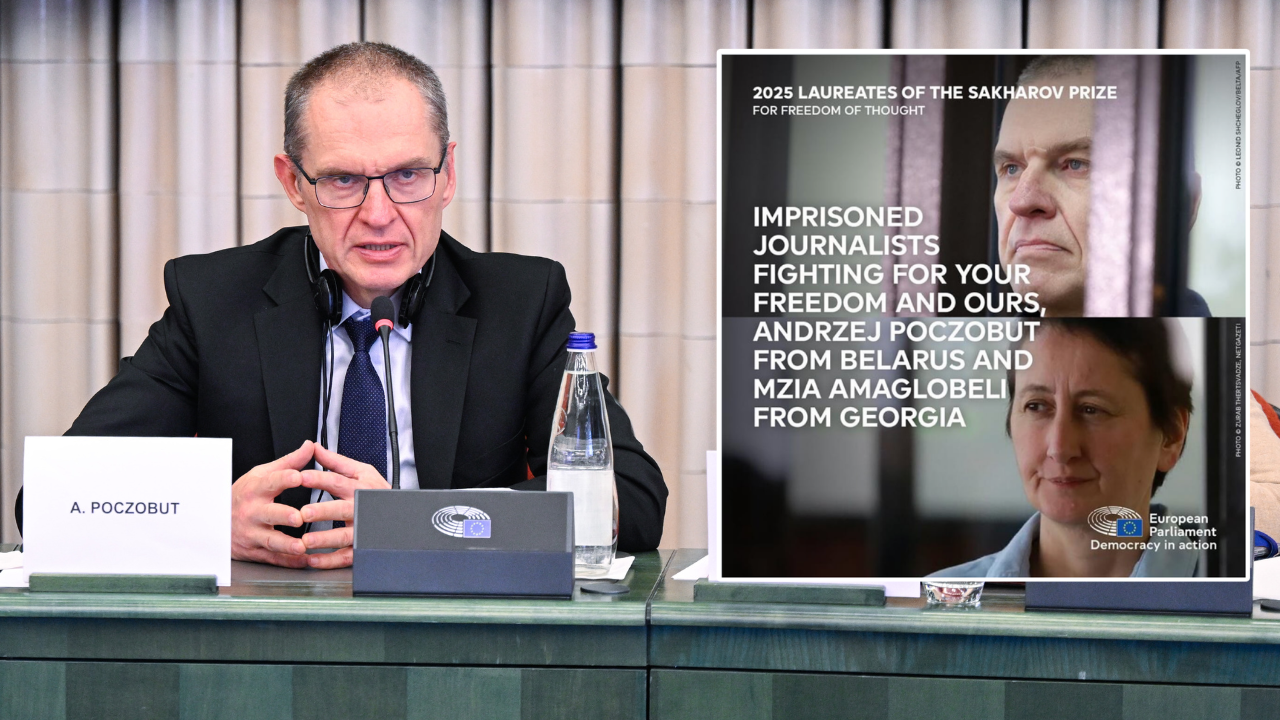
Belarusian journalist of Polish origin, Andrzej Poczobut, believes that receiving the European Union’s highest award influenced the decision to release him.
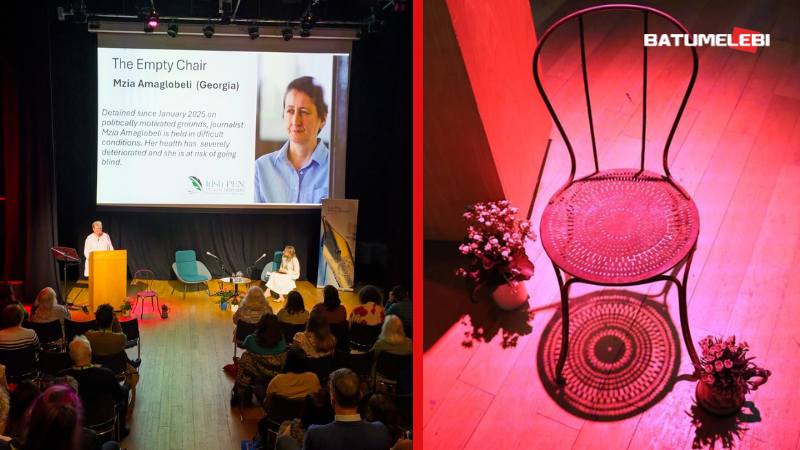
In 2025, while still imprisoned, Poczobut was awarded the European Union’s top human rights award — the Sakharov Prize for Freedom of Thought — jointly with Mzia Amaglobeli, founder of Netgazeti and Batumelebi..
“The point is that publicity is still something regimes fear,” Poczobut told Netgazeti.
Andrzej Poczobut also expressed hope that the Georgian authorities would release the other Sakharov Prize laureate, Mzia Amaglobeli.
“A journalist should be free. I hope that Mzia Amaglobeli will be released. I hope that political repression in Georgia will stop, that Georgia will continue developing its democracy and improve relations with the West,” Poczobut told Netgazeti.
At the same time, he said that Tbilisi is currently moving along the path Belarus took in 1994, when Alexander Lukashenko came to power.
“There is a saying: no matter what you give Russians, they will still build a Kalashnikov rifle. To paraphrase that, no matter what you give post-Soviet elites, they will build authoritarianism. I think this is something Belarus and Georgia have in common. Georgia’s government is heading in a dangerous direction — the same direction Belarus chose in 1994, unfortunately. Sometimes the consequences of decisions unfold over time. And I think… I hope Georgia’s authorities will not go as far as Belarus did,” Poczobut added.
Andrzej Poczobut is a Belarusian journalist and activist representing the Polish ethnic minority in Belarus. A critic of the Lukashenko regime, he has been detained several times, most recently in 2021, when he was sentenced to eight years in a penal colony. However, in April this year, he was released as part of a prisoner exchange between Belarus and Poland. Polish Prime Minister Donald Tusk welcomed Andrzej Poczobut upon his arrival in Poland.
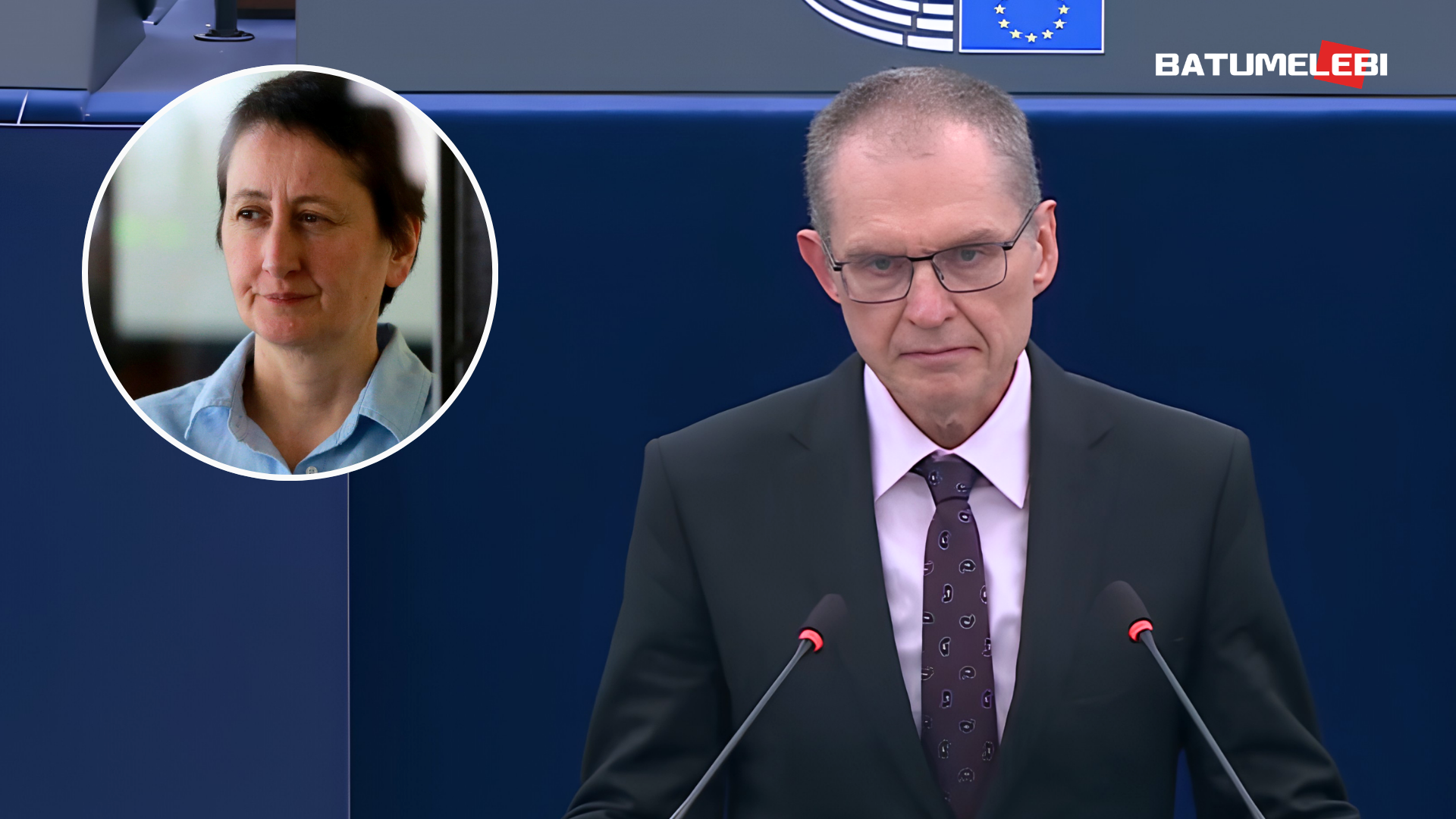
He is currently in Strasbourg and is scheduled to address the European Parliament plenary session on June 17.
Earlier, he appeared before a joint meeting of the Committee on Foreign Affairs, the Subcommittee on Human Rights, and the Committee on Development, opening his remarks with an appeal to the Georgian authorities.
“I would like to address the Georgian authorities and call for the release of Mzia Amaglobeli. Journalists should be free, not in prison. I hope the Georgian authorities will release her,” Poczobut said.
During his speech at the joint committee meeting, Poczobut focused primarily on the rights of the Polish minority in Belarus and said that the only Polish association in Belarus had been declared illegal.
“A criminal case was also opened against me. This is the result of Lukashenko’s approach — his attack on the values that we, as Poles, represent. We represent Polish and European values. These values are very important to us, and this is precisely where our conflict with the Lukashenko regime lies,” Poczobut said.
Poczobut linked his imprisonment to his journalistic work. He said there is no freedom of speech in Belarus and that even critical voices on social media are punished.
“In prison, I met people whose only ‘crime’ was, for example, liking something on social media. This is the diagnosis of the situation in Belarus. Belarus is, without any doubt, a totalitarian state,” Poczobut added.
Other speakers at the committee meeting also called for Mzia Amaglobeli’s release, including David McAllister, Chair of the European Parliament’s Committee on Foreign Affairs.
“You all remember last year the European Parliament decided to award the Sakharov Prize to you, dear Mr. Poczobut, but also to Mzia Amaglobeli from Georgia in recognition of their steadfast commitment to democracy, human rights, and the freedom of expression and independence in her work as journalist despite the intimidation she facing.
We deeply regret that Ms. Amaglobeli remains imprisoned in Georgia. Let me recall that the European Parliament continues to call for her immediate and unconditional release and stands in unwavering solidarity with all those unjustly detained,” McAllister said.