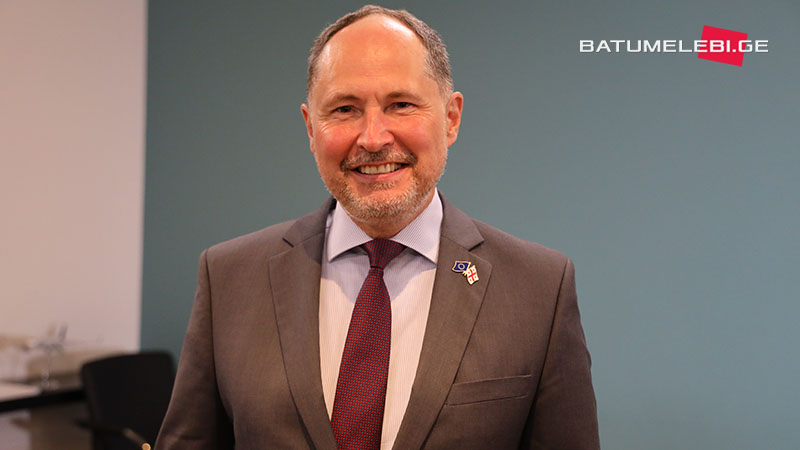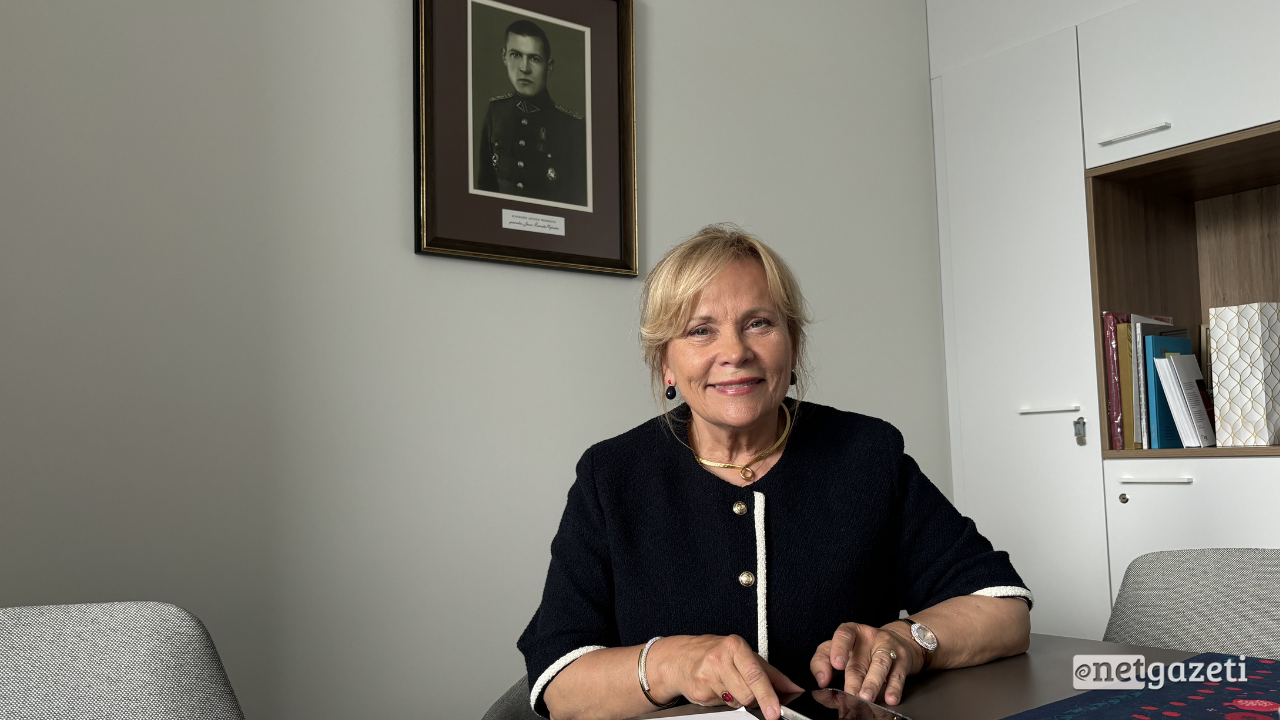
On June 17, the European Parliament will discuss the annual report on Georgia as a candidate country. Rapporteur on Georgia Rasa Juknevičienė expects the European Parliament to adopt the report with a large majority, as the main political groups in Europe are united in their assessment of Georgian Dream.
In an interview with Netgazeti, Juknevičienė also responded to Georgian Dream’s statements that the European Parliament’s decisions have no power at all:
You know, when people don’t believe in democracy, they don’t understand what Parliament as such means. The European Parliament is the capital, or the main center of European democracy. Here you can find all kinds of opinions. Here we are debating, sometimes having hot debates, sometimes very light debates, but we are also able to find solutions and compromises.
You can feel the all-European democratic environment here regarding Georgia as well. When I started here as a member of the European Parliament, we had many meetings with Georgian Dream members of Parliament and also officials in 2019 and a little bit later. Together with my colleagues from different groups, we immediately realized that they were manipulating our opinions. They were doing one thing at home, and here they came with different opinions.
So this was noticed. When the 2024 election happened, I was nominated as the standing rapporteur on Georgia. Before those elections, I was full of hope that I would be very helpful to the Georgian people and Georgian statehood in achieving the goals of a candidate country. This hope was gone after the election. Unfortunately, Georgia is now not able to use the very important momentum.
Before the large-scale war in 2022, nobody talked about enlargement to Eastern Partnership countries. There was no political will to do this, and now, because of Ukrainians, because of their heroic fight for the European way of life, this window was opened for Moldova, for Georgia, and also for the Western Balkans.
So here is the biggest crime, I would say, of the Georgian Dream, of this de facto government: they are not using this opportunity, but are moving in the opposite direction, further away from European Union membership.
Their claims are not right. The European Parliament is doing a lot. We have meetings with the European Commission; also, we are politicians representing member states, elected in member states, so we have opportunities to convince many other politicians in one way or another.
And the report will be very critical – the most critical among all candidate countries. Even the report on Serbia is not as critical as the one on Georgia, and it’s not only because of my opinion. This is also disinformation going around from Georgian Dream about me being the most powerful person here, working against Georgia. No, I am not against Georgia; I am a friend of Georgia. Other rapporteurs from different political groups, shadow rapporteurs from all five main political groups in the European Parliament, are sometimes even more critical than I am about what is going on in Georgia.
This time, there were no debates in the Foreign Affairs Committee. People spoke, and they were on the same page regarding the situation, except for one pro-Russian political group, which is mainly composed of members of the German Alternative for Germany party. But those are very well-known pro-Russian politicians, so it is not a surprise that they have a different opinion.
- Georgian Dream often says they have no business in an EU represented by people like you or countries like Denmark. They claim there is a ‘second Europe’ based on different values where they would prefer to belong. They are betting on Eurosceptic political actors — how likely is this ‘bet’ to pay off?
On the contrary. The biggest friend of Bidzina Ivanishvili and Georgian Dream was Viktor Orbán, and he lost the election heavily. It’s really a very important breakthrough in the European Union.
Yes, some other countries will face elections next year. We don’t know the outcome, but the “Orbánization” of the European Union didn’t happen. And yes, there will be ups and downs, as everywhere in democracies, but the mainstream political parties are very much pro-European now, and they share the same understanding of Georgia as it is written in the report.
And I hope that there will be a huge majority of votes in the next plenary in Strasbourg, because there was a huge majority of votes in the AFET Committee.
- Now that the Orbán factor is removed, are sanctions regarding Georgian Dream more likely to happen?
We will see. Of course, we have this hope. At least, we are trying to push for it, and it’s mentioned in our report. It will be a recommendation for the European Commission and the European Council to do this.
- Are there any other countries opposing sanctions?
Yes, there are some countries, and I think Georgian Dream is trying to work with them, saying that, look, Georgia is such an important country for the European Union and for Europe. We are in a very serious geopolitical situation, especially now when Russia is in a situation where it is under sanctions… There is an energy policy and everything else. They are using this card, but Georgia is not the only important country anymore, because I think Armenia is now becoming the leader in the region in terms of democracy. They are already taking the European Union flag from Georgia, unfortunately for Georgians.
But nevertheless, for all Georgian people, it is also very important to support Armenians today, because it is their hope as well not to lose the European approach in the region at all. So Armenians are now working on behalf of Georgia as well to make this region important.
- So, if democratic backsliding doesn’t stop in Georgia, is there a chance that the European Union can continue business as usual because of this connectivity and strategic role?
I don’t think so with this Commission and this European Parliament. Yes, there are factors that Georgian Dream is trying to use, but it depends more not on us, but on the Georgian people. If the Georgian people give up, no one in the European Union will do their job instead of the Georgians. You have to understand this. What happened in Hungary? – After 16 years of being in power, Orbán lost. Now you have the third term of Bidzina Ivanishvili, so it means that a very long-lasting regime is in Georgia.
But what happened in Hungary is that opposition politicians and all of civil society striving for democracy were united, and they gave a very clear alternative to the Hungarian people. So my wish and my hope is that the Georgian people will also be able to organize themselves in such a way as the Hungarians did.
- Is the Georgian opposition doing enough for this kind of unity?
I think they are. They are trying, and they have to find a common solution on leadership, to show a very clear alternative to the people, because an election will come sooner or later.
Of course, it’s difficult when all those media outlets are captured and are under the control of Georgian Dream. I understand how difficult it is. People are imprisoned, they are attacked, and journalists are imprisoned. Now, in Georgia, you have more political prisoners per capita than in Russia. This is really a very brutal regime in Georgia today. But nevertheless, without the Georgian people’s understanding and their strategic approach towards the future… we will help, of course. But we are not the most important players in this game.
- You have mentioned Georgian media. TV Imedi was banned from the European Parliament. Should we expect the same decision regarding Rustavi 2 and POSTV?
I hope so. We have approached this issue several times. So, Imedi made a very brutal mistake by attacking me and maybe others here as well. They were not acting according to the rules we have here. But other outlets are also operating here like Russian brutal propaganda. My opinion is that we have to ban them from the European Parliament and other institutions.
- On June 17, the Parliament will hear from Andrzej Poczobut, who was recently released by the Belarusian government. You mentioned that another 2025 Sakharov Prize laureate, Mzia Amaglobeli, remains jailed by Georgian Dream with no meaningful international access to see her. The fact that even Lukashenko’s regime is now releasing or exchanging political prisoners — what does Georgian Dream’s stance indicate? Does it suggest they are on a more authoritarian path, or perhaps a lack of Western involvement in Georgia?
Maybe both. I don’t think that in Georgia the situation is more brutal than in Belarus. In Belarus, it is really a very brutal and long-lasting regime. But it’s very similar. Dictators everywhere are very similar. They do the same things: imprisoning opponents and critics, and closing free media. Usually, they start with the national TV broadcaster. It’s not necessarily only in non-EU countries.
In Lithuania, the government, not exactly new now, also wanted to do the same with the national broadcaster that was done in Georgia many years ago, or in Hungary. But people went to the streets immediately, at the very beginning of the process. In Belarus and Georgia, people were silent at the very beginning when the first signs appeared of a possible dictatorship or authoritarianism. This is a very important lesson learned for us from Georgia and Belarus.
Regarding Mzia Amaglobeli, I think that it would be very important for both of them to stay in contact. Despite the fact that she is in prison, her case should reach Andrzej Poczobut. I very much expect that Andrzej Poczobut will be able to raise the issue of Mzia Amaglobeli.