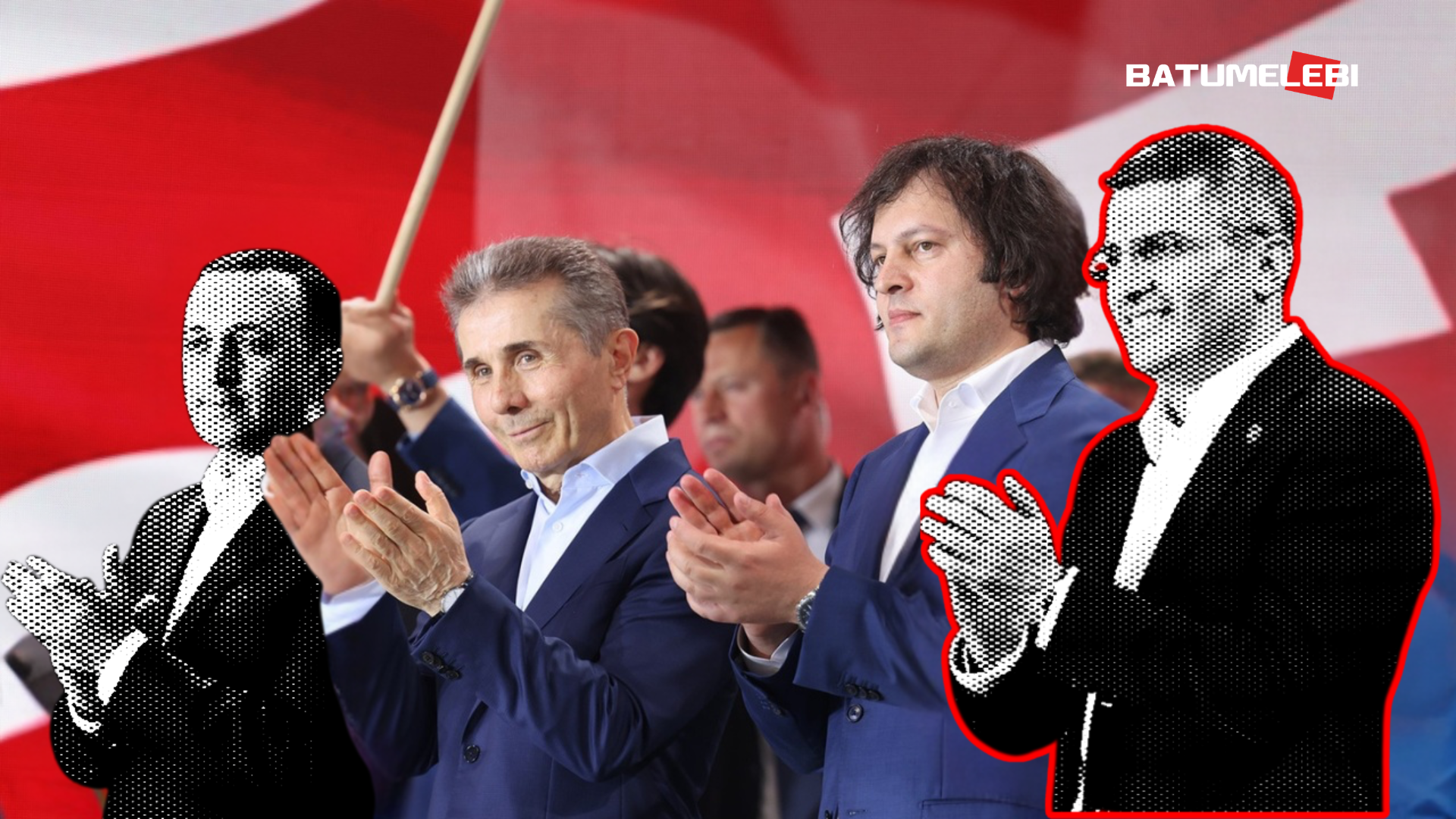
Besarion Alavidze, a former Supreme Court judge now residing abroad, has publicly accused Georgia’s ruling elite, including Bidzina Ivanishvili and the Murusidze-Chinchaladze group, of exerting pressure, issuing threats, and interfering in high-profile court cases. In a video recorded earlier but recently made public, Alavidze discusses previously unknown instances of pressure on judges.
Former Supreme Court judge Besarion Alavidze says he was under such pressure and stress that he contemplated suicide. “Many times I thought about climbing onto the facade of the Supreme Court and hanging myself with my judge’s robe, so people would publicly see that a judge had taken his own life, and everyone would understand what was happening in the judiciary,” Alavidze said in a video published on October 2, 2025, by lawyer Kakha Tsikarishvili.
In the recording, made three years ago, Alavidze discusses several high-profile cases, including the Rustavi 2 dispute and a metallurgical plant case involving Joseph Kay and the Patarkatsishvili family. He says that because of these and other cases, he attempted suicide, was locked in chambers with other judges, and was even forced to undergo unnecessary surgery. Alavidze claims he was offered bribes by representatives of the ruling Georgian Dream, including in connection with the Rustavi 2 case, and also received threats, allegations he had previously raised with the media.
Tsikarishvili said he decided to release the video with Alavidze’s consent after the former judge left Georgia. Addressing the timing, just ahead of elections, he wrote on Facebook: “For those who will ask why right before the elections — yes, I could have done it later, but I believe now is the time for the truth to speak out.”
In a video circulated on Facebook, former Supreme Court judge Besarion Alavidze first describes how, back in 2014, he became a target of the Georgian Dream government over the “metallurgical plant case.”
“That year, the judicial clan was still trying to align itself with the new government,” the ex-judge says. “Vasil Roinishvili told me that in this case, the existing decision had to be upheld. I told him that until I reviewed the case, we couldn’t uphold anything — the case had serious problems. Roinishvili said that the decision had to be in favor of the Patarkatsishvili family. On the other side was Joseph Kay. [Then-Supreme Court Chair] Kote Kublashvili, meanwhile, suggested that we should reconsider the decision, perhaps by altering something. But Roinishvili’s position was unequivocal,” Alavidze recalls.
Vasil Roinishvili is currently a Constitutional Court judge, but at the time Alavidze refers to, he too was a Supreme Court judge. Earlier, Roinishvili had served as Adjara’s chief prosecutor during the killing of Sergeant Shavadze — a case that the prosecutor’s office falsified.
According to Alavidze, after he did not comply with Roinishvili’s request, he received a call from Valeri Tsertsvadze, the former head of the Tbilisi Court of Appeals.
“…I was summoned to Chinchaladze’s office. Chinchaladze was then the head of the Administrative Chamber and, by definition, had no involvement in a civil case — he was completely irrelevant to the matter. There I found Murusidze and Valeri Tsertsvadze. It was around 2014. In short, they told me that it looked like I was obeying Kote [Kote Kublashvili], and then they started cursing him,” the ex-judge recounts.
According to Besarion Alavidze, when the conversation in the office did not work, the judges who were leaders of the clan summoned the presiding judge of the case to a restaurant.
“At that café were Murusidze, Chinchaladze, Valeri Tsertsvadze, and, if I’m not mistaken, also Roinishvili. It was a purely criminal, street-style showdown,” said Alavidze, describing how, at that stage, they told him what problems he would face — that he would lose his job and be accused of “taking bribes.”
The former judge said he feared that his family members might also be in danger.
Alavidze also recalls another meeting at the café when he met one-on-one with Valeri Tsertsvadze. After this encounter, the judge attempted suicide, but unexpectedly, at 5 a.m., Levan Murusidze arrived at the Supreme Court building.
With Murusidze, the judge agreed that he would no longer review the case due to an “overload of cases.” Another active leader of the judicial clan, Valeri Tsertsvadze, then made him an “offer”:
“Valeri Tsertsvadze told me, ‘Cause yourself self-injury, or we will injure you — break your arm or your leg,'” said Besarion Alavidze, adding that with the help of his assistant, he made arrangements with a doctor and even underwent an artificial surgical operation in Surami.
Ultimately, the case was reviewed by other judges, including Vasil Roinishvili and Levan Murusidze.
Former Judge on the Rustavi 2 Case: “Even Ivanishvili Didn’t Expect This Outcome”
“They told me at the beginning, ‘Rustavi 2 will become pro-government, and then the situation will settle down,’” says former Supreme Court judge Besarion Alavidze.
Alavidze recalls that all three judges on the panel handling the Rustavi 2 case — himself, Eka Gasitashvili, and Paata Katamadze — were locked in their office until 1 a.m. The judges even refrained from bringing their phones inside, fearing surveillance by the State Security Service (SUS). At one point, they even considered climbing out of the window and going directly to the TV station.
“Beforehand, Chinchaladze’s assistant, Bolkvadze, came to talk and asked us what we planned to do with the case,” says Alavidze. According to him, the panel was not allowed to set a hearing date, a move supported by then Supreme Court Chair Nino Gvenetadze.
The judges agreed the case had numerous legal flaws and that the best course was to send it back to the Appeals Court.
“Then Judge Mzia Todua burst in, saying she was unwell: ‘If you want all of us to survive, this case must be referred to the Grand Chamber.’ At that point, we were locked in the room and told we couldn’t go home unless we transferred the case,” Alavidze recounts.
After the case was handed over to the Grand Chamber, the Georgian Dream government allegedly attempted to intimidate and bribe each judge individually, with a few exceptions.
“Roinishvili was already supportive, while Nino Gvenetadze said she feared losing her position as Court Chair,” says Alavidze. He claims a close acquaintance, sent by the security services, even offered him a bank card and told him to name his price. “You and your family can leave the country through a VIP exit, and once things calm down, you can return,” they allegedly said.
“They didn’t want a dissenting opinion written at all, because Strasbourg might have reached a different conclusion,” Alavidze explains, adding that he refused the bribe.
According to Alavidze, other judges told him in private conversations that “even Bidzina Ivanishvili himself did not expect this outcome in the Rustavi 2 case.”
“These people you call the clan are ready for anything—they are so deeply entangled in crimes,” Alavidze emphasized.
Lawyer Kakhaber Tsikarishvili has stated that he has already forwarded Alavidze’s recorded testimony to the Prosecutor’s Office.