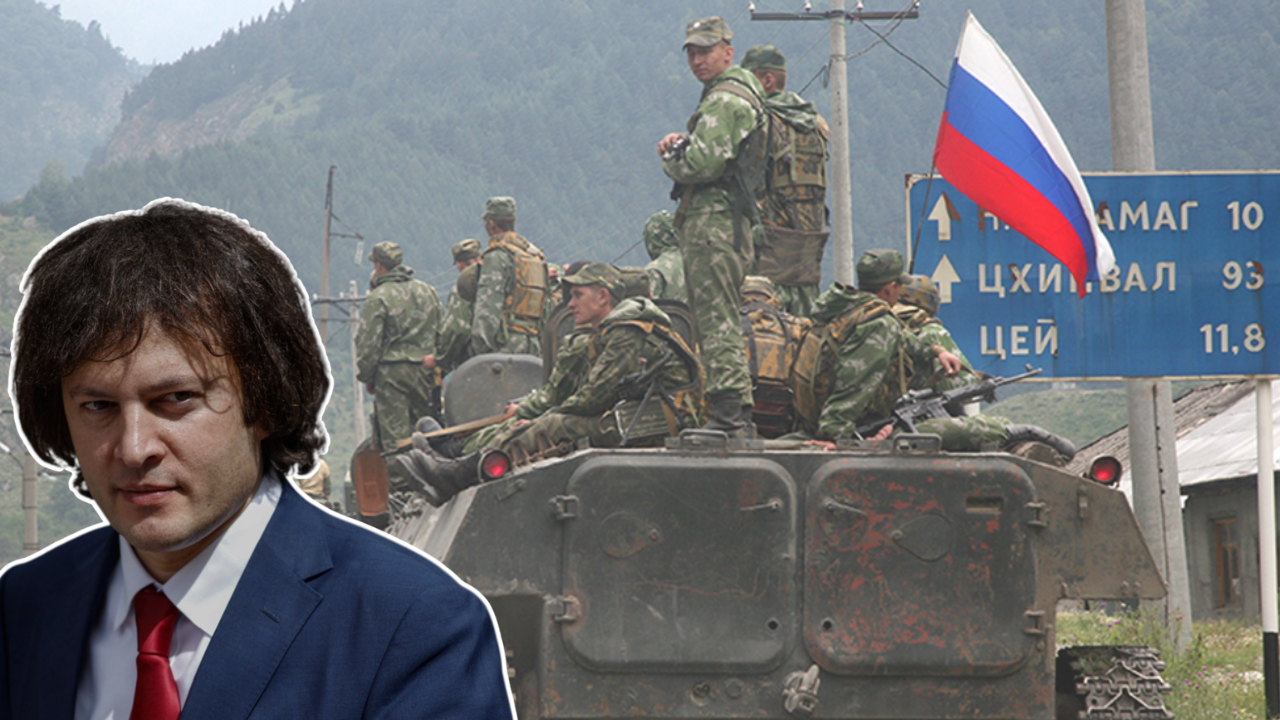
As Georgia commemorates the 18th anniversary of the August 2008 war, the ruling party is reviving Kremlin-style narratives — blaming the former government for Russia’s invasion and branding its critics as “Russophobes.”
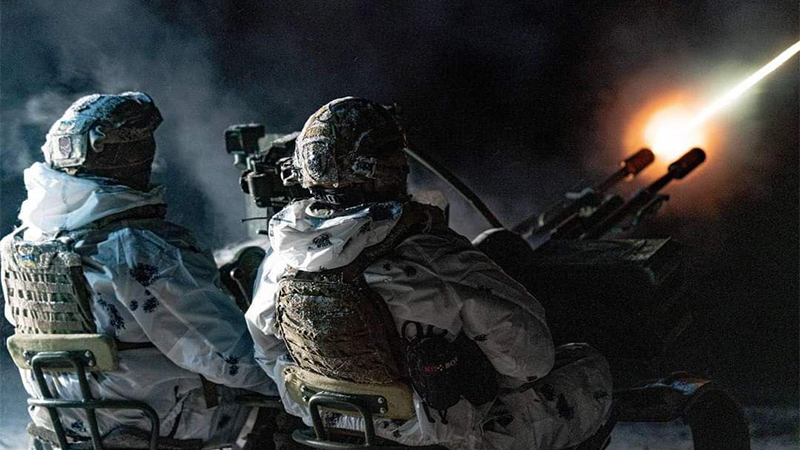
On August 7, 2008, Russian forces crossed Georgia’s internationally recognized border, launching a full-scale invasion that killed hundreds, displaced tens of thousands, and cemented Russia’s military occupation of the Georgian regions of Abkhazia and Tskhinvali (South Ossetia). Although Russia’s involvement in Georgia began with the conflicts following the Soviet Union’s collapse, the 2008 war represented a decisive escalation.
Eighteen years later, as the country commemorates the anniversary of the war, the Georgian Dream government has intensified a campaign portraying critics and those protesting Russia’s occupation as “Russophobes”—a term widely associated with Kremlin propaganda.
Shifting the Blame: In a lengthy statement published on 4 August, Georgian Dream Prime Minister Irakli Kobakhidze repeated the ruling party’s longstanding claim that Russia’s occupation was the result of actions taken by the former United National Movement government. He wrote, “As a result of crimes committed by the United National Movement regime against its own state and people, Russia occupied 20 percent of Georgia’s territory.” Kobakhidze also claimed that critics of Georgian Dream became “Russophobes” only after Russia launched its full-scale invasion of Ukraine in 2022, suggesting that their opposition to Moscow is externally driven rather than rooted in Russia’s actions against Georgia.
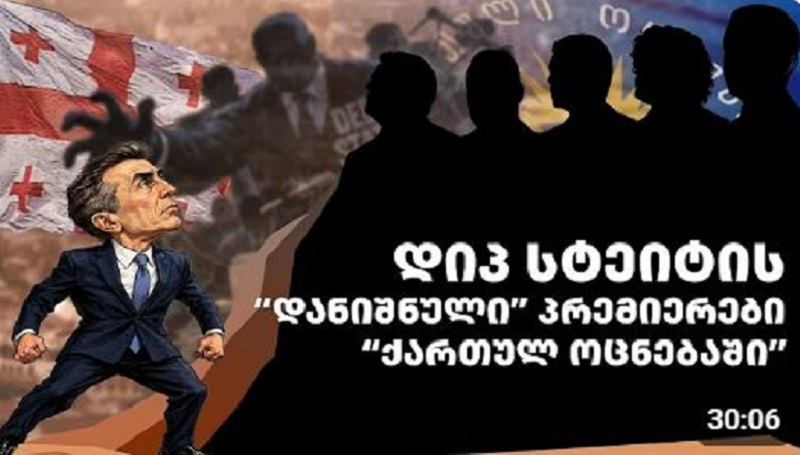
Other senior members of the ruling party echoed this message. Tbilisi Mayor Kakha Kaladze similarly argued that people protesting Russia’s occupation are “agents serving the ‘Deep State’,” while MP Levan Machavariani insisted, “For us, Russia has been an occupier since August 2008.”
In reality, Russia’s status as an occupying power in Georgia predates its invasion of Ukraine, and the government’s current narrative directly contradicts Georgia’s own official actions and historical record. Georgia severed diplomatic relations with Russia in September 2008, adopted the Law on Occupied Territories that same year, pursued legal cases against Russia in international courts, and has consistently raised the issue of Russia’s occupation before international bodies, including the UN General Assembly. In addition, most of Abkhazia and the Tskhinvali region had already been under Russian occupation since the early 1990s conflicts. The August 2008 war expanded Russia’s control to new areas, including Akhalgori municipality, the Kodori Gorge, and several villages beyond the previous boundary. It also led to Russia’s recognition of the independence of de facto Abkhazia and South Ossetia.
A Familiar Voice from Moscow: The “Russophobia” narrative also surfaced in Moscow just one day before Kobakhidze’s statement. Appearing on Russian propagandist Vladimir Solovyov’s platform, Georgian businessman and leader of a pro-Russian political party, Mamuka Pipia, claimed, “Russophobia in Georgia is orchestrated from the West,” closely mirroring the message later adopted by Georgian Dream officials.
The Politics of Historical Revisionism: Former MP and National Security Council adviser Teona Akubardia contends that the messaging advances the Kremlin’s interests by distorting the history of the 2008 war. According to Akubardia, the narrative relies on four central claims:
- Blaming Georgia for the war: The Georgian Dream frames Russia’s occupation as the result of actions by the former Georgian government, rather than as Russian military aggression.
- Denying Georgia’s anti-Russian protests before 2022: It implies that opposition to Russia began only after the invasion of Ukraine, disregarding earlier demonstrations such as the mass protests of “Gavrilov’s Night” in 2019.
- Claiming anti-occupation sentiment is externally driven: Critics of the Georgian Dream are depicted as acting under the influence of the West, the “Deep State,” or the so-called “Global War Party.”
- Linking support for Ukraine to disloyalty to Georgia: The ruling party claims that its critics care more about Ukraine than about their own country, questioning their loyalty.
Akubardia rejects these claims, noting that international courts have established Russia’s responsibility for war crimes and ethnic cleansing in 2008. She adds that the ruling party ignores the mass anti-Russian protests of “Gavrilov’s Night” in 2019 — a demonstration the Kremlin itself labeled as “Russophobia.” She argues that “Russophobia” is a propaganda tool, not a neutral term, and that by using it, the Georgian Dream government legitimizes Kremlin rhetoric and undermines real anti-occupation sentiment.
August 7 Tells Two Stories — Russia’s Invasion and Georgian Dream’s Kremlin Alignment