“There is no ‘deep state’ controlling Western governments. It simply doesn’t exist,” said UK Ambassador to Georgia Gareth Ward, addressing the Georgian Dream’s frequent narrative used to discredit Western partners and dismiss their concerns — from calls for the release of political prisoners to demands for accountability over police brutality during protests, and more.
When asked what this ‘deep state’ claim reminded him of, Ambassador Ward pointed to the disinformation and “hybrid threats coming the direction of Russia against Europe”.
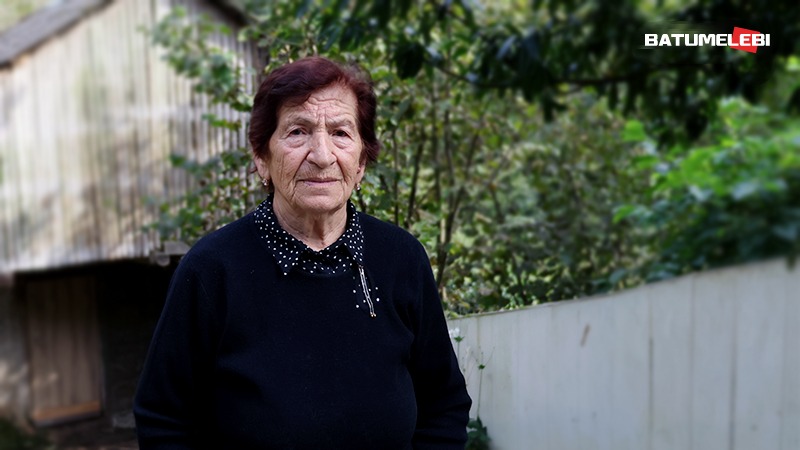
On July 30, just two days before the final hearing in Mzia Amaglobeli’s case, the British ambassador visited the office of Batumelebi – the independent media outlet she founded 24 years ago. In the interview, he recalled several statements the UK has joined in support of Mzia’s release and emphasized: “the UK’s position has been clear”.
– Thank you so much for being here, for this interview and for all the support that you offer to Georgia’s democracy as the ambassador of the UK.
And to begin with, tell us about your visit to Batumi this time.
Thank you. It’s great to be here. It’s my first visit to Batumelebi and Netgazeti, but it’s not my first visit to Batumi. I’ve been here four times over the last year, and it’s a fascinating city. Also, I think there’s a lot of potential for UK–Georgian cooperation here.
So, I have been visiting the Maritime Academy, first of all, because the UK and Georgia have a long cooperation on education, and I always like to meet young people and discuss their hopes and future plans.
I’m also meeting with businesses — talking about tourism, talking about infrastructure — because the UK wants Georgia’s economy to succeed. We want Georgia to stay connected to the Western economy, to the European economy. The UK is a big investor here, and we also have an increasing number of tourists coming here.
So, I hope that my visit will help attract British tourists not only to Tbilisi and Kakheti, but also to Adjara and Batumi.
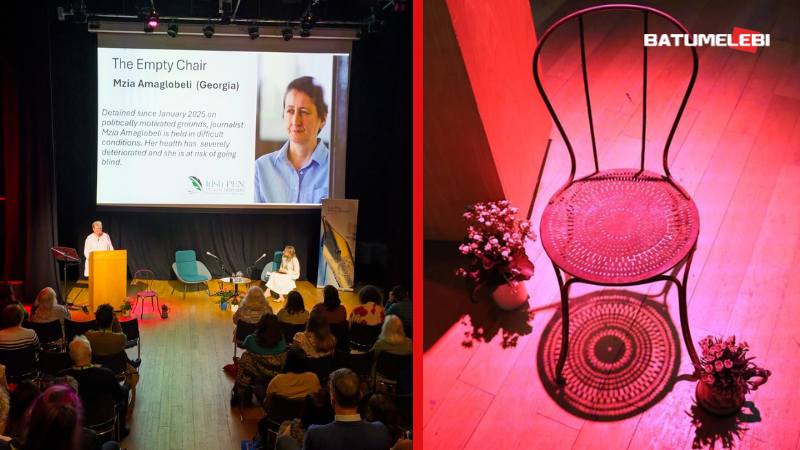
– And also, it’s very important that this time you are here, because for this city and for this region, the main story right now is a journalist and the founding CEO of the independent media organization, Mzia Amaglobeli, who has been in prison for almost seven months now. You have made a statement once already, as many other ambassadors and foreign ministries from various countries. And in two days, Mzia’s verdict is expected. In your view, what should people who believe that she’s a political prisoner, prisoner of conscience, do to secure her release?
So, as you say, the UK position has been clear. Back in January, we joined a group of 14 other countries in the Media Freedom Coalition to talk about our concerns about the fact that her detention was unjustified and that she should be released. That was something that the Council of Europe Human Rights Commissioner had also said at that stage in January.
And then again in April, a large group of countries, including the UK — 37 countries in the OSCE organization — noted our concerns about the decline in media freedom in Georgia and the growing hostility toward journalists here, and we called for the release of Mzia.
And then, just earlier this month, 20 or so foreign ministers from across Europe also pointed out the problems with arbitrary detention and the politicized trials here in Georgia, including for journalists, and asked for the release of all political detainees.
So, I think our position has been very clear. And I think that’s what everyone can do — Georgia’s friends and partners, like the UK. We want the best for democracy in Georgia, and so we talk about the things we’re concerned about. And I think that’s the role of the international community in drawing attention to this case.
And we hope that, in the nearest future, our concerns will have been listened to.
– So, you’ve talked about the political prisoners and the statements made by many different partners of Georgia. We also see that, currently in Georgia, the Georgian Dream party has around 60 political prisoners, and looking at the court hearings, the regime doesn’t really show any intention of releasing them.
There is another measure that the UK has also used: sanctions. The UK has imposed sanctions on individuals who have seriously violated human rights and failed to properly investigate those violations. It’s interesting that almost all the individuals sanctioned by the UK have since been removed from office by the Georgian Dream government.
This makes many Georgians believe and feel that the UK should expand the list of sanctioned individuals, as an increasing number of people are involved in rights violations and the obstruction of the rule of law and justice.
Based on your information, should we expect new sanctions? And if so, when?
So, you’re correct that the UK has imposed sanctions under two sanctions regimes. First of all, under our human rights sanctions regime, relating to the use of force against protesters, and secondly, under our anti-corruption regime, relating to corrupt appointments in the judiciary.
Those sanctions are public knowledge, and all I can say at this stage is that we remain very concerned. As foreign ministers from across Europe have said, if Georgian Dream, if the Georgian authorities continue to move away from democracy, we will use all the measures that we have in our relationship to downgrade our relationship.
But I don’t comment — it’s UK government policy — we not to comment ahead of time on future sanctions designations. So I’m not going to get into detail on any future moves.
– Do you feel that those already imposed sanctions were effective?
What I would say is that there are still no instances of investigation of police for the use of force during the protests, and that was one of the main issues that we identified. So, we still call for accountability of those police officers and for an investigation into those who were involved in that brutality.
– And to my last question: when we talk about the partnership between the countries, we see that the Georgian Dream government criticizes nearly all European leaders. Irakli Kobakhidze even claimed that, during the European Political Community summit in Albania, at the round table — and I quote — “The UK Prime Minister kept his head down the entire time because he didn’t like hearing facts that directly pointed to the unjust treatment of Georgia.” Georgian Dream also claims that governments in Europe are controlled by a so-called ‘deep state’, which allegedly is trying to drag Georgia into war.As the ambassador of the UK — one of Georgia’s major Western partners — can you share your thoughts on the phenomenon of the ‘deep state’?
So, I can be very clear. There is no ‘deep state’ which controls Western governments. It doesn’t exist. There is no global war party which is trying to drag Georgia into opening a second front. That is not what we are trying to do.
And we are not trying to force foreign liberal values onto Georgia. We want Georgia to be a part of the Euro-Atlantic, which for the UK particularly means to integrate with NATO and to be an active partner in the OSCE and Council of Europe.
Of course, Georgia also has an important relationship with the European Union. So, I think it’s very sad and unhelpful that these narratives and misinformation are used to suggest that the West has a negative agenda towards Georgia. We don’t, and quite the opposite.
We very much hope that the Georgian authorities will change path and return to integration with Euro-Atlantic.
– You are a diplomat with a long history and experience, and the ‘deep state’ is not a very Georgian phenomenon. What can you tell us — what does it remind you of? So, when we say Georgia has to return to the European path and abandon this use of made-up ‘deep state’ fear, where is it headed now, and where does it have to return from?
I, of course, work closely with my European colleagues, and a few days ago the European External Action Service made a statement talking about the dangers of misinformation. I think that’s also something the UK would fully subscribe to.
We know that misinformation is being used against Europe, that hybrid threats are coming from the direction of Russia against Europe, trying to undermine our democracy and trying to undermine the security of our continent. We want to work with Georgia to make sure that we are all more resilient to those threats, including disinformation.