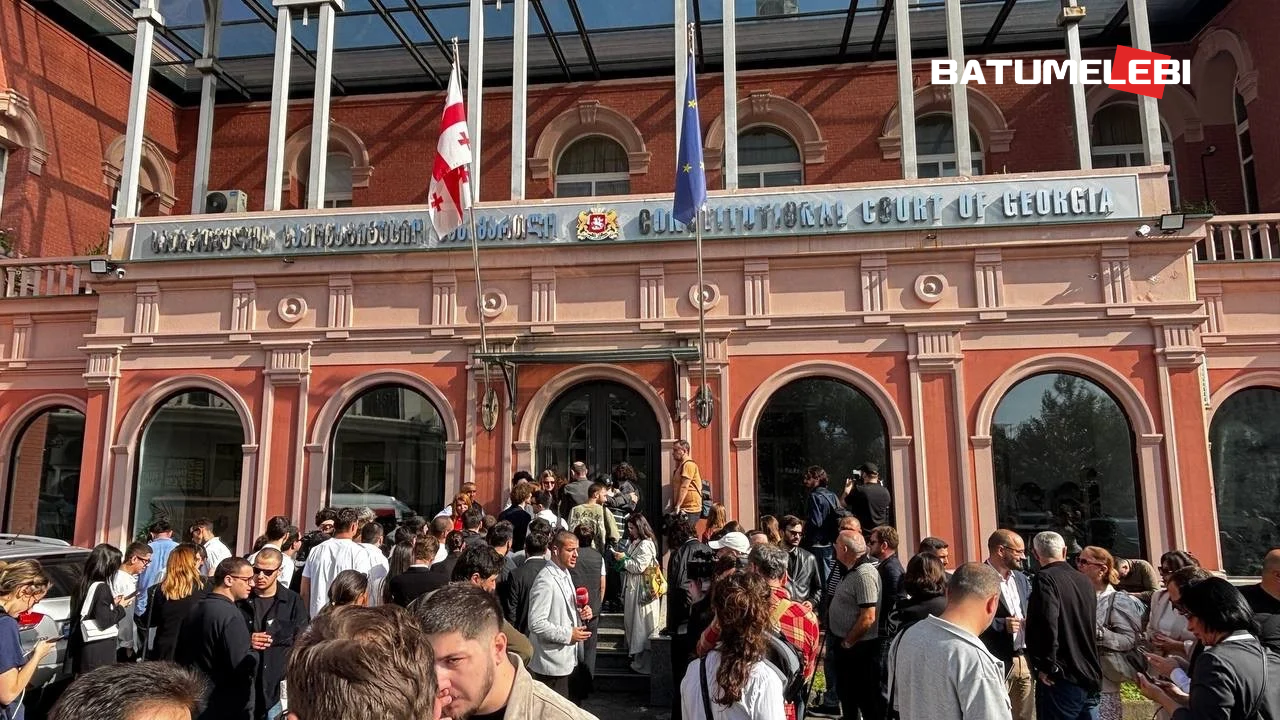
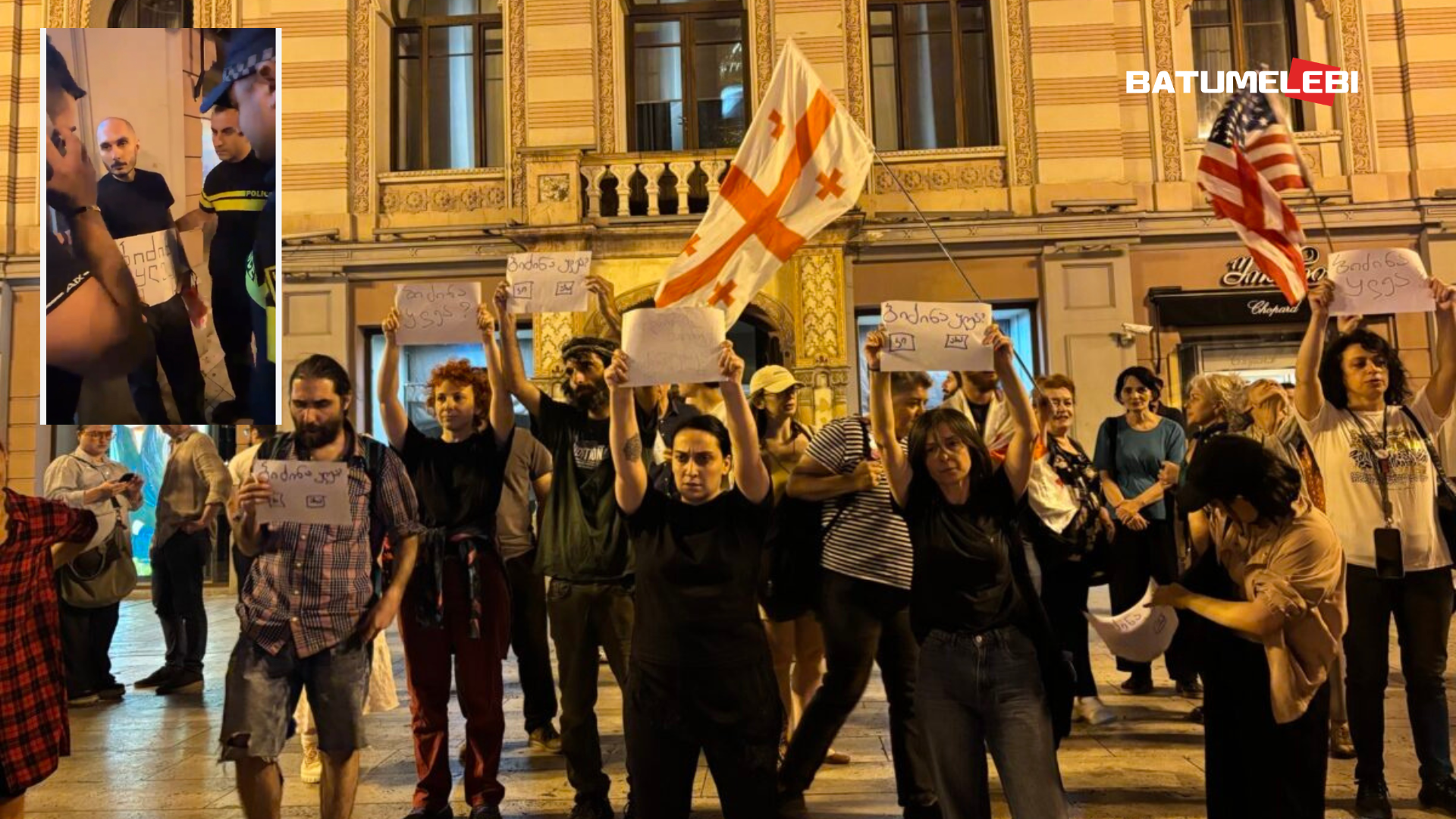
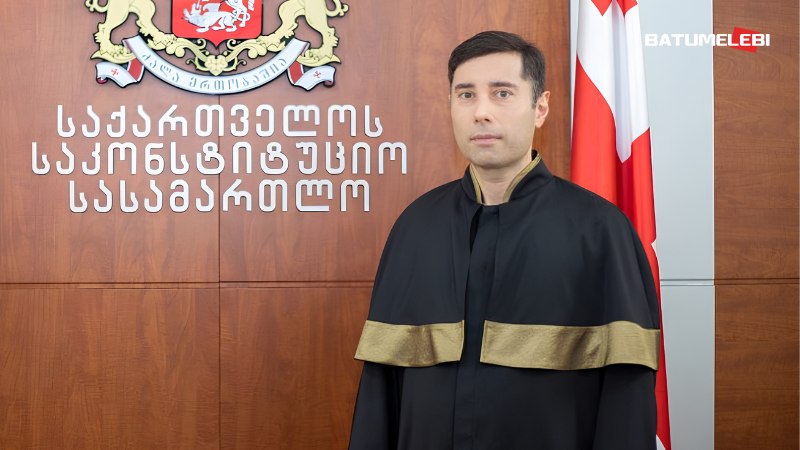
Judge Koba Chagunava has sentenced Soviet history researcher, educator, and historian Rusiko Kobakhidze to three days in administrative detention for the second time, again on the grounds of “blocking the road.”
“The violation is evident, and there are no circumstances that would rule out detention,” — said Judge Koba Chagunava in his reasoning.
The first arrest took place on the night of November 5, when Kobakhidze was accused of “artificially blocking the road.” At that time, Judge Chagunava sentenced her to one day in administrative detention. On November 13, Kobakhidze was summoned to court over another case — this time concerning an alleged road blockage on November 4.
The question of why the Ministry of Internal Affairs is pursuing an identical charge for a road blockage from the previous day — when the court had already considered and ruled on November 5’s “road blockage” — remained unanswered.
“So, as I understand it, it is said that the goal of this so-called ‘offense’ is to cause problems for vehicle movement, correct? I believe an act can only be considered an offense if the intent behind it is clear. How does the Ministry of Internal Affairs determine intent if it doesn’t even ask the alleged ‘offender’ what their purpose was in stepping onto the road?
Let me also remind you that the purpose of a court is precisely to establish the context of a particular ‘violation.’ For example, if the law says that breaking a window is a crime, then what is the point of a court if everyone who breaks a window is automatically punished without considering context? If someone breaks a window in a burning house to rescue a child, is that a crime? The intent behind breaking the window is entirely different — it is to save a life — and that cannot be criminal.
The City Hall blocked Vake [a Tbilisi district] for two years. People truly experienced problems — ambulances couldn’t reach destinations; it was hard for me to get to work. Yet no one thought to accuse Kakha Kaladze [the city mayor] of intentionally blocking the road to inconvenience residents. His goal was street rehabilitation — a positive intent — and that was not treated as an offense.
It’s extremely superficial to claim that my goal is to disturb people or stop buses. As you know, I’m not an idle person. I’ve spent a year of my life — in cold, rain, heat, and frost — standing there not to inconvenience anyone but because this country faces very serious problems, and that is how I express my protest.
Blocking the road is a symbolic act of manifestation. The goal is not to commit a crime or harm anyone, but to express protest against what’s happening in the country — particularly against the new repressive laws being enacted recently.
Suppose tomorrow they adopt a law limiting how much you can eat in the morning, or prohibiting people from wearing their hair down or short skirts — will you keep demanding detentions with the same zeal?
Apparently, there are three fines issued against me already, and had I not been detained, I wouldn’t even know. I’m told I owe 15,000 lari in total. I’m genuinely curious — I earn 262 lari monthly at one university, 180 at another, and used to receive about 1,000 lari from SovLab [the Soviet Past Research Laboratory], but not anymore, since our work has been restricted. So, with a total income of about 500 lari a month, how can I possibly pay such fines?
These regulations are repressive precisely because they impose fines on people who simply cannot afford to pay. Indirectly, it’s a message: if you don’t want to be fined, stop protesting. The purpose of these laws is not to ‘restore order,’ but to suppress dissent — to ‘“Seal their mouths, shoot them straight at their legs!’ [popular phrase from Georgian film Sherekilebi/The Eccentrics ],”Rusiko Kobakhidze said this in court — just moments before Judge Koba Chagunava once again found her guilty of “artificially blocking the road” and sentenced her to three days of administrative detention.