Azerbaijani President Ilham Aliyev and his wife, Mehriban Aliyeva, arrived in Georgia today, on April 6.
The Georgian government confirmed the visit only today, despite reports about Aliyev’s trip having circulated unofficially as early as yesterday.
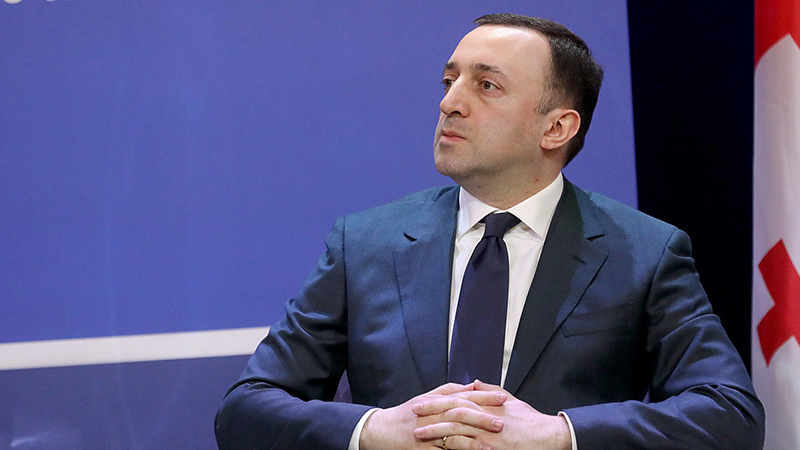
According to official information, Ilham Aliyev is scheduled to meet with Irakli Kobakhidze and Mikheil Kavelashvili. His program also includes visits to the memorials of the Heroes and Heydar Aliyev, where he will lay flowers.

Photo: Foreign Ministry of Georgia; 06/April/2026
In parallel with the official visit, it became known that Azerbaijani journalist Afgan Sadygov was detained by police in Baku after being deported there on April 5 by Georgian authorities, despite a ruling by the European Court of Human Rights prohibiting Georgia from extraditing him to Azerbaijan due to threats to his safety.
“According to the most recent information, my husband, Afgan Sadygov, has been detained by the police, and I do not know exactly where he has been taken,” Sadygov’s wife, Sevinj Sadygova, reported.
Sevinj Sadygova is currently in Europe with their children. Afghan had also wanted to go there, but was unable to do so due to the legal and bureaucratic obstacles he faced.
UPDATE: Soon after the information was published, lawyers of Afgan Sadygov informed the public that he was released. However, details about the grounds for his detention and where he was held for several hours remained unknown.
Later, Tamta Mikeladze, head of the Social Justice Center, which represents his interests, stated that they contacted the journalist and Afgan Sadygov was not formally detained. As Mikeladze reported, the police took him to a station without explaining the grounds on the spot, which led his relatives to believe that he had been detained.
“Afghan Sadygov has been released by the Azerbaijani police. We spoke to the journalist just now, and he says he was on the street when he realized he was being followed. Officers then approached him and told him he was wanted and had to accompany them to the police station. At the scene, they did not explain the reason for taking him in, which gave both him and his relative the impression that he had been detained.
At the station, it turned out that he was still listed as wanted in connection with an old case, so procedures were carried out to remove him from the list and conduct the necessary checks. After about 40 minutes, he was released from the police station.
The journalist is now at home, but even this episode clearly shows the reality of vulnerability and fear in which he lives in Baku,” Mikeladze wrote.
Afgan Sadygov’s Deportation from Georgia
Before before Aliyev’s visit, the Georgian Dream detained, tried, and deported to Azerbaijan Afgan Sadygov, an Azerbaijani political prisoner and journalist, in Tbilisi.
At a late-night hearing held on April 4–5 at the Tbilisi City Court, Judge Tornike Kochkiani ordered the administrative expulsion of journalist Afgan Sadygov to Azerbaijan over a Facebook post.
Sadygov’s lawyers had suspected from the outset that the authorities were planning such a move. Their suspicion was based on the fact that a few days earlier, the criminal prosecution against Sadygov in Azerbaijan had been unexpectedly suspended. This gave the Georgian side formal grounds for deportation. However, there are concerns that once Sadygov is returned to Azerbaijan, criminal proceedings against him will be immediately resumed.
“Wherever there is a dictatorship, police officers are ready to sell and trample everything for a salary and a police uniform and they do it with love, dedication, and pride.”

According to the Georgian Ministry of Internal Affairs, proceedings against Sadygov were initiated under Article 173 of the Code of Administrative Offences, and the court found him liable, “specifically for insulting a police officer on social media. He was fined 2,000 GEL, expelled from Georgia, and banned from re-entering the country for a period of three years”. The ministry’s statement also referred to administrative penalties previously imposed on him in connection with his participation in protests in Tbilisi.
“Afgan Sadygov was detained on April 4 by officers of the Tbilisi Police Department in order to present him before the court and ensure the timely consideration of the case.
We remind the public that Afgan Sadygov has been identified 62 times for various types of administrative offences, including violations of the rules on assemblies and demonstrations, for which he has already served administrative detention twice.”
According to Tamta Mikeladze, head of the Social Justice Center, the post served merely as a pretext for Sadygov’s detention and deportation. The organization is representing Sadygov.
As it emerged, the court rejected all motions filed by Sadygov’s defense. Among them, it refused to admit a ruling by the European Court of Human Rights, which prohibits Georgia from transferring Sadygov to Azerbaijan. The court also rejected a request for voluntary departure. Sadygov had been willing to leave Georgia on his own, but not for Azerbaijan — instead seeking to travel to a safe third country where his wife and children already reside.
“The court made the decision to expel Afgan Sadygov to Azerbaijan at 4 a.m. [April 5, 2026] Judge Tornike Kochkian did not grant any of our motions. He did not even attach the binding decision of the European Court. The court ignored the fact that Sadygov’s wife and children have political asylum in Europe, and that a relevant country could receive him. Accordingly, we argued that he should have been allowed to leave the country voluntarily, and the court should have given him that opportunity. We were ready to submit the necessary documents in the shortest possible time to both the court and the Migration Department. For all this time, it was precisely the Georgian Dream authorities who had prevented Sadygov from leaving Georgia, which had made it formally impossible for him to initiate asylum procedures earlier.
[…]
I have not seen such a level of undermining of the rule of law and the Convention framework in any case in recent years. This is a catastrophe. It is a deliberate special operation against this individual. Consider the sequence:
On April 1, Azerbaijan suspended criminal prosecution against him and informed Georgia.
On April 2, Sadygov was notified.
On April 3, the court lifted his bail and movement restrictions.
On April 4, he was detained and within hours transferred to Azerbaijan. Everything was pre-planned and organized by two authoritarian regimes,” Mikeladze said.
On April 4, at around 23:00, Azerbaijani journalist Afgan Sadygov was detained by police at his apartment in Tbilisi. Footage from a surveillance camera showing police arriving at the residence was released by his wife, Sevinj Sadygova.
According to her, the police attempted to break down the door, but Sadygov opened it himself. “After opening the door, the Afgan was violently taken away without showing any valid reason,” wrote Sadygova.
On April 5, Tamta Mikeladze reported that he was in Baku and free, though “Now he is alone, plunged into complete uncertainty, doubt, and obscurity, and has no idea what the regime will do in a few weeks or months — what kind of case they will fabricate against him or how they will punish him.”
Azerbaijani Media Shifts Tone: From Criticism to Praise of Georgia in Baku–Tbilisi Coverage
Notably, Baku, which just a few months ago stood out for issuing ultimatums and publishing sharply critical articles about Tbilisi through its state-controlled media, is now striking a conciliatory tone.
A few months earlier, in December 2025, several pro-government Azerbaijani media outlets accused the Georgian authorities of pursuing policies against peace in relation to transit tariffs with Armenia and publicized the “details of a conflict” between Baku and Tbilisi. They also reported on prolonged delays of Azerbaijani trailers at Georgian customs, warning that Baku “would not leave unanswered” what it described as the undignified treatment of its citizens, allegedly expressed through rudeness and irony by Georgian customs officers.
In recent days, however, the government-affiliated news portal Trend.az has been publishing articles highlighting successful economic cooperation between Azerbaijan and Georgia.

Photo: Facebook page @Mikheil Kavelashvili / მიხეილ ყაველაშვილი; 06/April/2026
“While disputes over the redistribution of global trade routes continue, Azerbaijan and Georgia are doing what others only talk about — they are turning their geographic location into real revenue and influence. These countries are no longer just partners in the Middle Corridor — they have become the backbone of this route,” the Azerbaijani state outlet Trend.az writes in an article titled “The Baku–Tbilisi Axis: A Quiet Transit Revolution in the South Caucasus.”
The same article notes that in recent months, Baku and Tbilisi have been actively cooperating — holding meetings, forums, and signing agreements. Georgia has also joined the International Association “Eurasian Transport Route.”



![რას [არ] აკეთებს მერია ბათუმში უსახლკაროებისთვის – ინტერვიუ](https://batumelebi.netgazeti.ge/wp-content/uploads/2026/10/covers-batumelebi-3-1.png "რას [არ] აკეთებს მერია ბათუმში უსახლკაროებისთვის – ინტერვიუ")