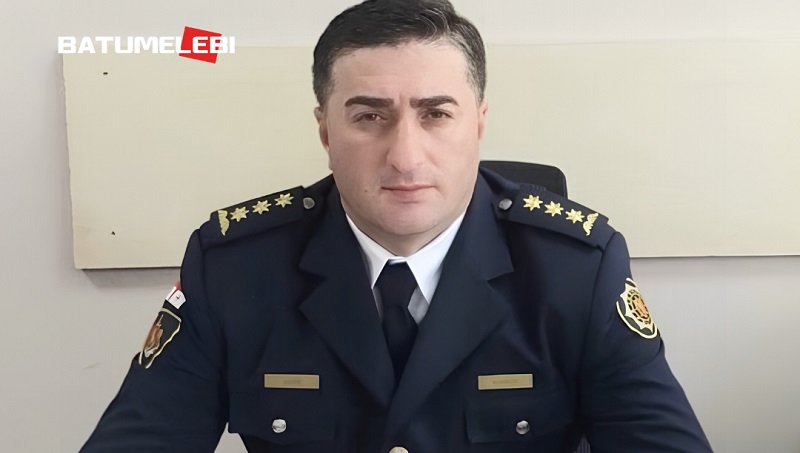
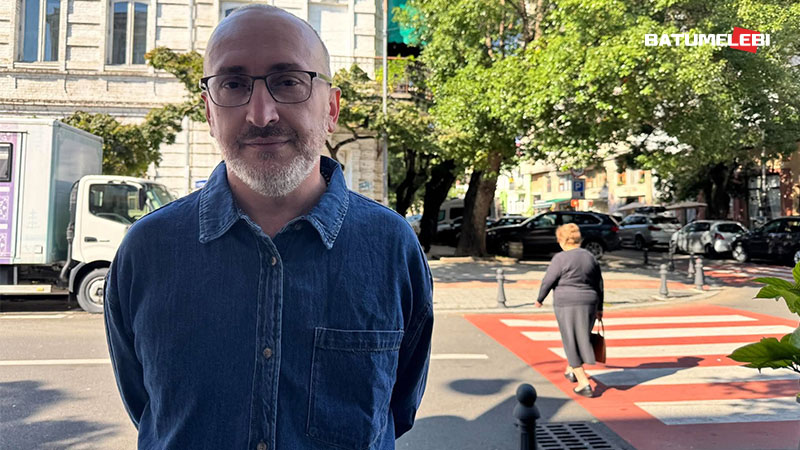
In the 2025 local self-government elections, Batumi has five mayoral candidates: Tamar Mikeladze [Homeland, Language, Faith]; Zviad Kvirikadze [Our United Georgia]; Gocha Gugunava [For Georgia – Gakharia]; Giorgi Tsintsadze [Georgian Dream]; and Kakha Tsiskaridze [Independent Candidate].
Although less than four weeks remain before the elections, pre-election campaigning in Batumi, as across the entire country, is barely visible. Georgia enters the local self-government elections deeply polarized. A significant part of society believes that holding elections under the illegitimate government of “Georgian Dream,” amidst repressive legislation and a political crisis, while protests have been ongoing for nearly 300 days, is nothing more than a farce.
So, what do we know about the 2025 local elections? Who is participating and who is not? Batumelebi has compiled the answers to these and other questions in this article.
Who Is and Isn’t Participating in the Elections
Local self-government elections will take place in Georgia on October 4, 2025. Eight opposition parties have decided to boycott these elections: the United National Movement, Strategy Aghmashenebeli, Girchi – More Freedom, Droa, Akhali, Federalists, Freedom Square, and European Georgia.
In contrast, three opposition parties will participate: Strong Georgia – Lelo, For Georgia – Gakharia, and Girchi.
Officials will open a total of 3,051 polling stations across 84 electoral districts. Of these, 2,284 stations will use electronic voting, while 767 will implement the traditional voting system.
Voters will choose 64 mayors and 2,058 members of city councils (sakrebulo). According to the Central Election Commission (CEC), as of October 4, 2025, 3,476,140 eligible voters will be listed on the unified voter list.
In total, 14 political parties have registered for the municipal elections: Conservatives for Georgia, Homeland, Language, Faith, People’s Power, Strong Georgia – Lelo, For Georgia – Gakharia, Georgian Dream, Girchi, Georgia, Left Alliance, Alliance of Patriots of Georgia, Georgian Unity, Green Party, Our United Georgia, and Free Georgia.
Electoral Principles of the October 4 Elections
On October 4, voters will elect mayors using a two-round majoritarian system. If no candidate secures more than 50% of the votes, a runoff will take place.
Voters will elect the City council (sakrebulo) members through a mixed system, where voters will cast ballots for both party lists and majoritarian candidates.
According to the International Society for Fair Elections and Democracy (ISFED), the ruling party, Georgian Dream, has modified the electoral system to influence outcomes. Key changes include:
- Abolishing the 40% threshold in the majoritarian component.
- Sharply increasing the share of majoritarian seats in municipal councils.
- Reducing the size of multi-mandate districts in the proportional component.
- Raising the proportional threshold.
- Altering the electoral formula to favor the leading party.
For instance:
- In 2021, the proportional threshold stood at 2.5% in Tbilisi and 3% in the regions; by 2025, it will be set at 4%.
- In the Tbilisi City Council, voters will now elect 25 out of 50 members through majoritarian contests — up from just 10 — while only 25 will be elected via proportional lists, down from 40.
- In self-governing cities such as Batumi, Poti, Kutaisi, and Rustavi, council sizes will decrease from 35 to 25 members, with 10 elected majoritarian and 15 through proportional representation.
- Another significant change involves removing the 40% threshold. Previously, a candidate needed to secure 40% of the votes to be elected to the council. Under the new amendment, the candidate who receives the most votes will win, regardless of the percentage obtained.
ISFED warns that these changes provide Georgian Dream with opportunities to secure council majorities even with relatively low voter support, particularly amid a fragmented opposition landscape.
Why Most of the Opposition Is Boycotting
Eight opposition parties have denounced the October 4 elections as a “Russian special operation” and refuse to participate.
They state, “On October 4, Ivanishvili’s regime plans another Russian special operation in Georgia. We, eight pro-Western forces, will not be accomplices in deceiving citizens. We will not take part in this operation nor sacrifice our citizens to existential danger by legitimizing lawlessness and injustice. We recognize only free parliamentary elections, which we will achieve through consistent isolation of the regime.”
This joint statement, made on July 19, remains in force. None of these parties registered as electoral subjects.
Why Lelo and Gakharia Are Participating
The split occurred after November 28, 2024, when PM Irakli Kobakhidze announced, “Today we decided not to prioritize opening negotiations with the EU until the end of 2028. We also refuse all EU budgetary grants until 2028.” This announcement triggered spontaneous protests outside Georgian Dream headquarters, evolving into mass demonstrations that have persisted for almost 300 days.
Protesters also demand early parliamentary elections.
While united in protest, opposition parties diverged on whether to participate in local elections. Lelo, For Georgia – Gakharia, and Girchi decided to participate and registered as electoral subjects.
Lelo’s secretary general and Tbilisi mayoral candidate, Irakli Kupradze, stated, “We are entering the battle with the Russian regime… October 4 is not just local elections; it is a verdict on the regime. We will not give up a single inch of ground.”
Giorgi Gakharia, leader of For Georgia, emphasized, “This is the only correct way forward. No boycott will be effective unless we can convince people to abandon the Georgian Dream. That requires meeting every voter, every family.”
Currently residing in Germany, Gakharia left Georgia after receiving a summons to a parliamentary investigative commission.
Girchi leaders announced on August 7, “We have never had the chance to demonstrate our vision at the local level. If we are not joining a revolution, the only alternative is to participate in local elections.” Girchi held primaries and nominated Iago Khvichia as its candidate for Tbilisi mayor.
Candidates and International Observation
The ruling party, Georgian Dream, stands as the only political entity with a mayoral candidate in every city and a complete slate of candidates for council positions. No other party competing in the elections reaches all municipalities and regions across the country.
International observers must register by September 27 for the upcoming local elections on October 4, 2025. However, it’s already clear that the elections will not receive monitoring from the OSCE/ODIHR, one of the world’s leading international election observation organizations.
As of September 6, OSCE/ODIHR had not received an invitation to observe the elections.
Georgian Dream publicly stated its lack of intent to invite the organization as an observer. Yet, on September 6, Georgian Dream’s Prime Minister Irakli Kobakhidze announced that a letter had been sent to OSCE/ODIHR inviting them to monitor the October 4 elections. By September 9, OSCE/ODIHR confirmed they would not deploy a mission to observe the municipal elections. The organization cited the late invitation from Tbilisi, issued with less than a month before the elections, as inadequate for meaningful and reliable observation.