The total number of prisoners of conscience has exceeded 60 in Georgia. But behind the numbers are specific names, and behind those names lie distinct pasts and futures.
Some are accused of group violence, including organized acts; some of attacking law enforcement officers; some of damaging surveillance cameras; and politicians of showing disrespect to Tea Tsulukiani’s Commission. Six individuals, meanwhile, faced criminal charges related to drugs simply for participating in civil protests.
It seems the strategy was precisely to exploit stereotypes, making it easier to build cases against citizens whose guilt society would more readily accept: three young Russian nationals, a young man with tattoos, a 22-year-old accused of using so-called “club drugs,” and an anesthesiologist-resuscitator.
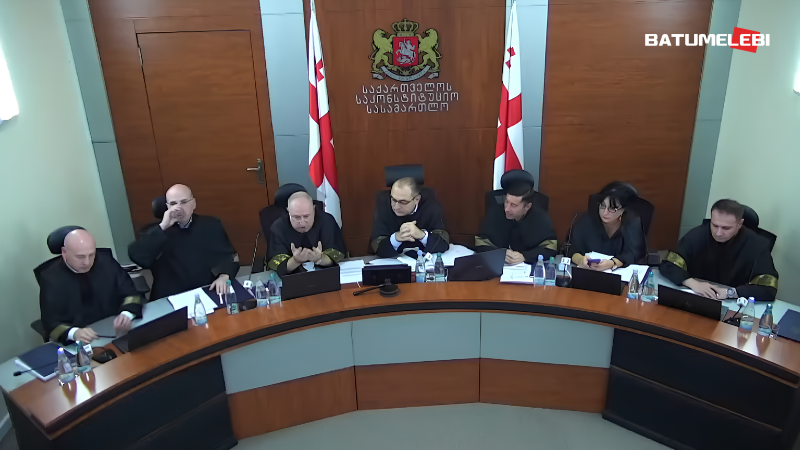
In all these cases, the accused and their lawyers assert that the drugs were planted. At every hearing, regardless of how biased or stereotypical a listener might be, the facts remain:
- There are no neutral witnesses.
- No camera footage confirms the seizure of drugs.
- Drug use is not proven.
Instead, what is evident:
- Police witnesses repeatedly give identical testimony.
- There is an anonymous informant whose identity the court does not require to disclose.
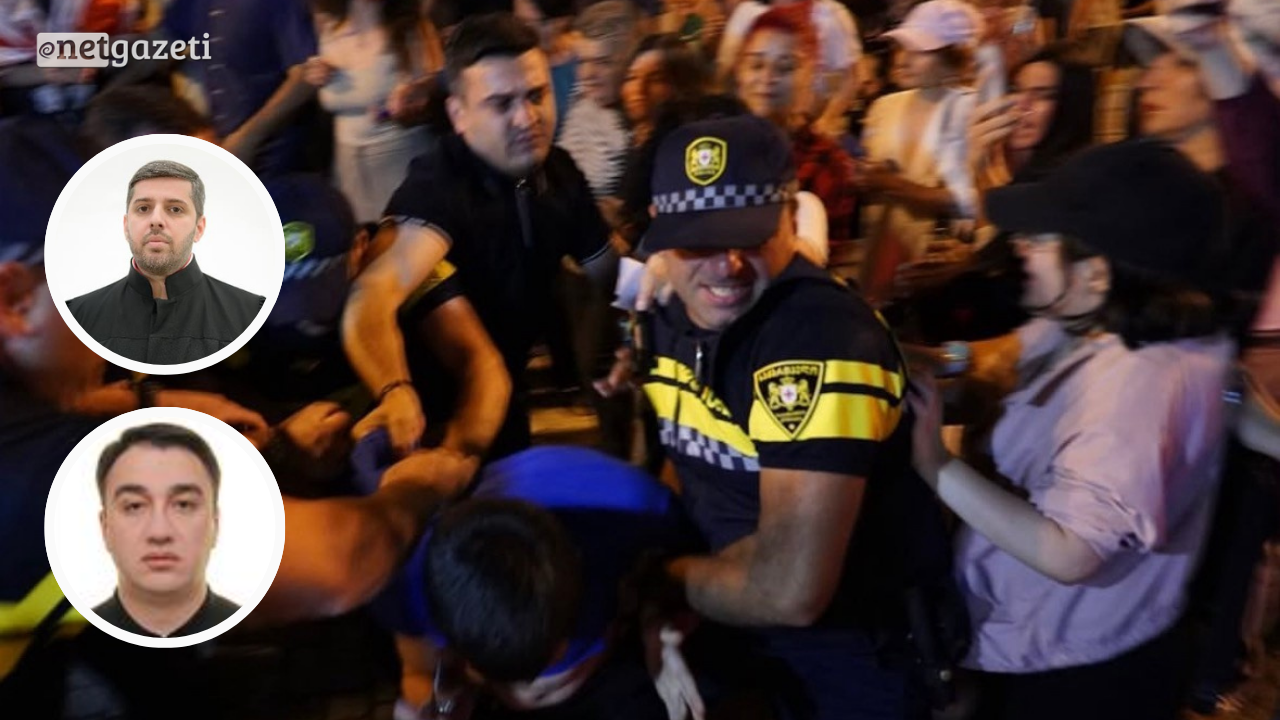
- DNA evidence from the seized drugs consists of saliva and sweat, which the defense claims was collected by police themselves using rubber gloves and then transferred onto the drugs they allegedly planted.
As a result, Nika Katsia, Anastasia Zinovkina, Artiom Gribul, and Anton Chechin face sentences ranging from 8 to 20 years, or even life imprisonment.
Giorgi Akhobadze and Tedo Abramov have been acquitted of the same charges, while the others are awaiting verdicts in the coming days.
“The handwriting, strategy, and approach are so identical that in criminal cases related to drug offenses against protest participants, we could replace person X with person Y and the overall picture would remain unchanged,” says Anton Chechin’s lawyer, Giorgi Chkheidze, in an interview with Netgazeti.
From Siberia to Georgia
Anton Chechin arrived in Georgia in 2022. A 26-year-old photographer and numismatist, Anton hails from Barnaul, Siberia. In Georgia, he met his future wife, Mancho Samkharadze. He left Russia due to repression, opposing Putin’s regime, protesting the war, and later facing persecution. He even organized small one-person protests and filed a collective complaint with the European Court of Human Rights regarding this persecution — a case he recently won against the Russian Federation.
Three years ago, when he found refuge and settled in Georgia, he could hardly have imagined that he would escape Putin only to find himself caught in the “Georgian Dream’s” captivity.
“My activism began in Siberia — I took part in protests against Putin’s regime, the bloody war, and the brutal treatment in prisons. I came to Georgia because of repression. I supported Ukrainians and participated in protests against the ‘Russian Law,’” Anton wrote in a letter sent from prison in January.
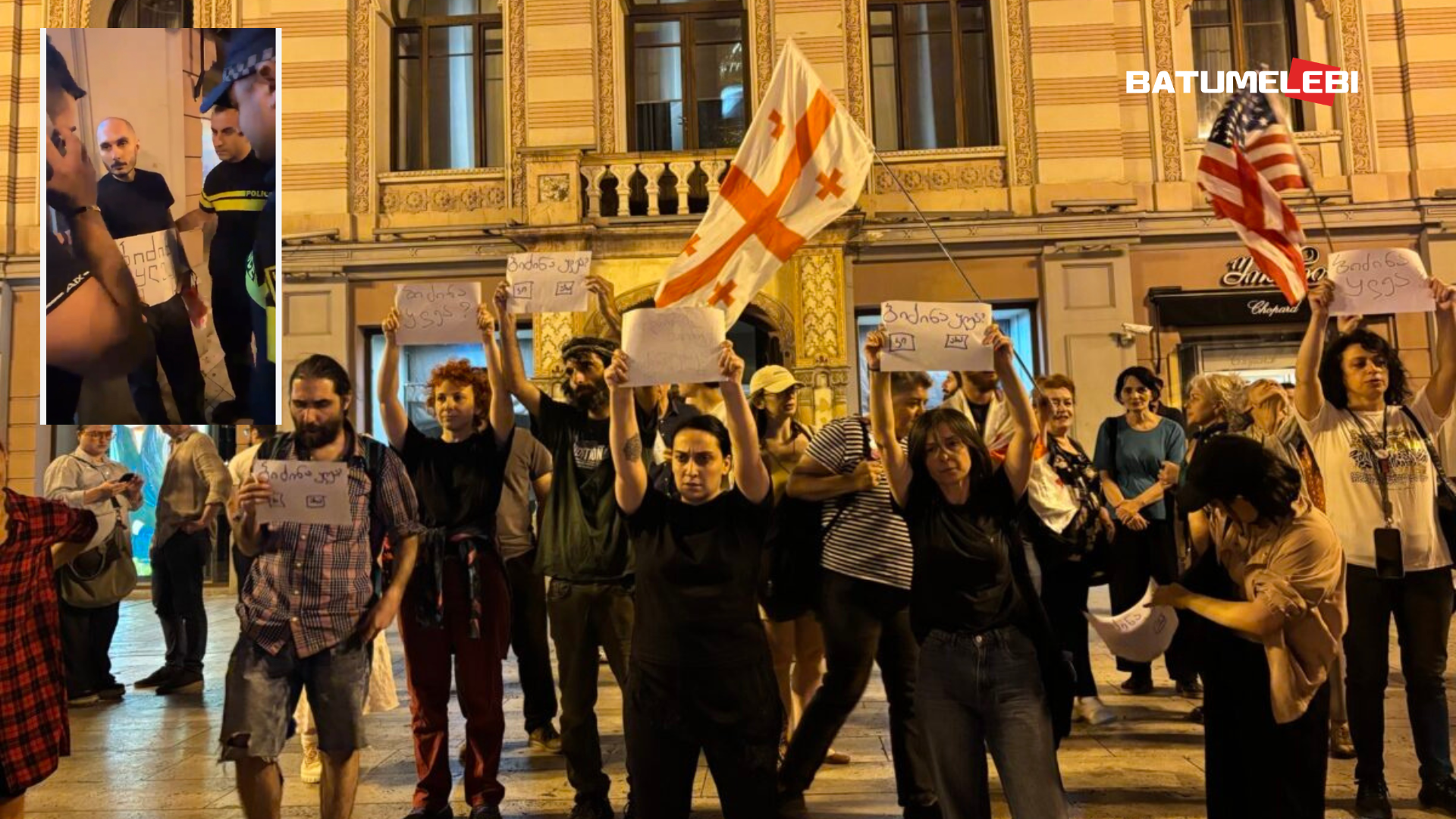
For participating in protests in Tbilisi, Anton was initially fined, at a time when society opposed the Russian Law. On November 18, 2024, he was arrested and warned to stay away from demonstrations. But the next time, police attention would cost him much more. “This all very much resembles what happens in Russia,” Anton remarked from his prison cell.
Arrest and Alleged Drug Planting
On the morning of December 3, 2024, while leaving his residence for work, Anton was intercepted. According to his lawyer, he was approached by police without identification, put into a car, and at that moment, a drug was planted in his pocket — a substance later presented as a white powder supposedly seized from the front left pocket of his jacket “he had covered his body with” – “TANTMOSILI” [Tantmosili – ტანთმოსილი, is the word not usually used in everyday spoken Georgian language but rather more older literature form, however every testimony repeats this word razing suspicion].
There is no video of Anton’s detention or search, nor any neutral witness present, as required constitutionally. Police claim the lack of footage is because Anton resisted (“struggled”), making filming impossible. A translator is presented as a neutral witness, which International Transparency – Georgia’s assessments consider a “questionable practice.”
“The translator’s role is to accurately and fully translate testimony or documents. No other participant has authority to take up the role of translator, because other participants might have an interest in the translation. Therefore, we believe the translator cannot perform any duties of other participants, including witnesses,” the organization reviewing Chechin’s case noted.
Anton’s lawyer, Giorgi Chkheidze, insists that Anton did not resist and was instead subjected to improper treatment by police.
“Did someone order you to plant drugs on me?” Anton asked one police witness, Zurab Rushishvili, involved in his search and arrest.
Rushishvili, alongside prosecutor Shmagi Gobejishvili, reacted indignantly. He dislikes all questions from the defense, often rolling his eyes or shaking his head. The prosecutor claims Anton was exerting pressure on the officer.
Prison Violence
Discussions about changing Anton’s pre-trial detention occasionally arise when new circumstances emerge. On June 16, Anton’s lawyer submitted a motion to include documents regarding the violent treatment Anton suffered from prison staff on June into evidences, also requesting a changing of his detention. The judge, however, ruled the circumstances unrelated to the charges and included the documents – addresses to the Public Defender and Special Investigative Service – only as informational.
Anton described the incident himself in a letter:
“I wanted to be moved to a non-smoking cell. I spoke to the prison staff about this… They twisted my arms and tried to remove me from the cell by force without explanation. About 5–6 staff used force to remove me. I was scared and did not understand why. After taking me from the cell, they shouted insults in Russian and Georgian, then inflicted physical pain and threatened that it would hurt more if I spoke. I told them I have a brain tumor and that I was suffering form chest and arm pain and requested medical attention, which they ignored. Afterwards, they placed me in solitary confinement for about 2 hours… I know prison staff in Russia violate prisoners’ rights in exactly the same way,” Anton wrote.
The Public Defender’s Office confirmed the bruising and injuries Anton sustained.
An Audience of Supporters
Anton’s hearings are not widely attended. Mostly, the same few faces appear: Sergey (name changed), a Russian national who travels from a small town in western Georgia; Marina, who closely follows cases of prisoners of conscience who are not ethnically Georgian and may feel isolated; Stanislav, another political exile from Russia; and a few others with similar stories.
“You Georgians are amazing, and believe me, it is painful to see you repeat our mistakes — Russia’s mistakes, Belarus’s mistakes. I have followed and supported protests in Georgia over recent years, including against the agents’ law. These laws are copies of those enacted in Russia, and I know the misfortune they caused there… Please attend court sessions. I know from my experience that having supporters in the courtroom is crucial. Write letters to prisoners. Good always prevails, but you must prepare yourselves for a long struggle. Your strength is in unity. Learn from our mistakes. Believe in your strength and courage. I believe the fight is necessary, regardless of the outcome. Anton believes in victory — he is more optimistic than I am,” Sergey told Netgazeti.
Anton’s Georgian wife, Mancho Samkharadze, watches hearings from the courtroom hallway. She is a witness for the defense and cannot attend the proceedings until she testifies.
“I don’t want to trouble people or ask them to attend Anton’s hearings, but it would make me and him happy. I am very grateful to everyone who comes, including complete strangers,” she says.
Lawyers’ Commitment
“What is happening today in our country and in the courts is unfortunate, but it does not give us the right to give up. Behind us, the lawyers, are people who most deserve freedom. I’m not only speaking about my client but every person unjustly held in prison today,” Anton’s lawyer Giorgi Chkheidze says after a hearing. Like other lawyers, he prepares in advance for every higher court, aiming to achieve a fair outcome for prisoners of conscience.
According to the defense, a verdict in Anton Chechin’s case is expected on September 2.
What is Happening in Georgia
In late fall 2024 and the beginning of winter, massive daily protests erupted across Georgia. The demonstrations were sparked by the ruling Georgian Dream party’s November 28 announcement to “postpone” the country’s EU integration bid until the end of 2028.
By that time, the ruling party had already been accused of massive electoral fraud during the October 26, 2024 parliamentary elections and of unconstitutionally forming a parliament boycotted by all opposition parties. The one-party parliament then proceeded to elect the government and appoint the president — all widely regarded as Georgian Dream-appointed, underscoring their perceived illegitimacy.
The protests, often referred to as the “Georgia Protests,” were met with violent crackdowns. Numerous journalists and citizens sustained physical injuries, and hundreds reported inhumane treatment at the hands of police and in detention, including cases amounting to torture. Journalists were attacked by uniformed, unidentified law enforcement officers during live broadcasts — none of which have been investigated.
Amidst police impunity and tightening repressive legislation, over 60 people have been jailed on criminal charges widely viewed as trumped-up and politically motivated attempts to silence dissent.
Since the late spring of 2025, eight opposition leaders were jailed for refusing to participate in a parliamentary commission purportedly formed to investigate crimes committed by the previous government, which left office in 2012. This commission has been widely criticized as a tool aimed at banning opposition parties. Notably, most opposition leaders summoned had never held high-ranking positions during the previous government’s rule, reinforcing suspicions that the commission’s true goal is to suppress the current opposition rather than investigate past crimes.
One of the main opposition figures, Giorgi Gakharia — who previously served as Interior Minister and Prime Minister under Georgian Dream — has been abroad “on an international business trip” since June, 2025. Meanwhile, an investigation is underway into his role in opening a checkpoint during his tenure as Interior Minister. The investigation involves criminal charges including sabotage, attempted sabotage under aggravating circumstances, aiding hostile activities on behalf of a foreign organization or one under foreign control, and mobilizing funds for actions directed against Georgia’s constitutional order and national security.
These are serious charges that carry potential prison sentences ranging from 7 to 15 years.
So far, two defendants pleaded guilty and sought plea deals but were nonetheless convicted and sentenced to prison without leniency. Only two defendants were acquitted and released in the courtroom.