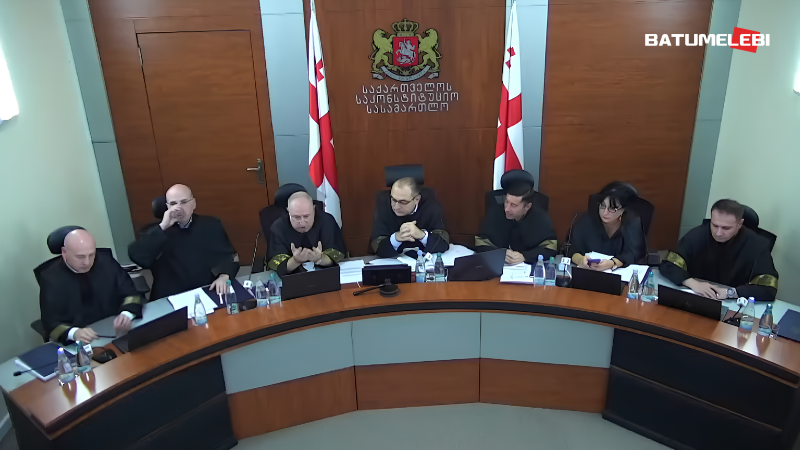
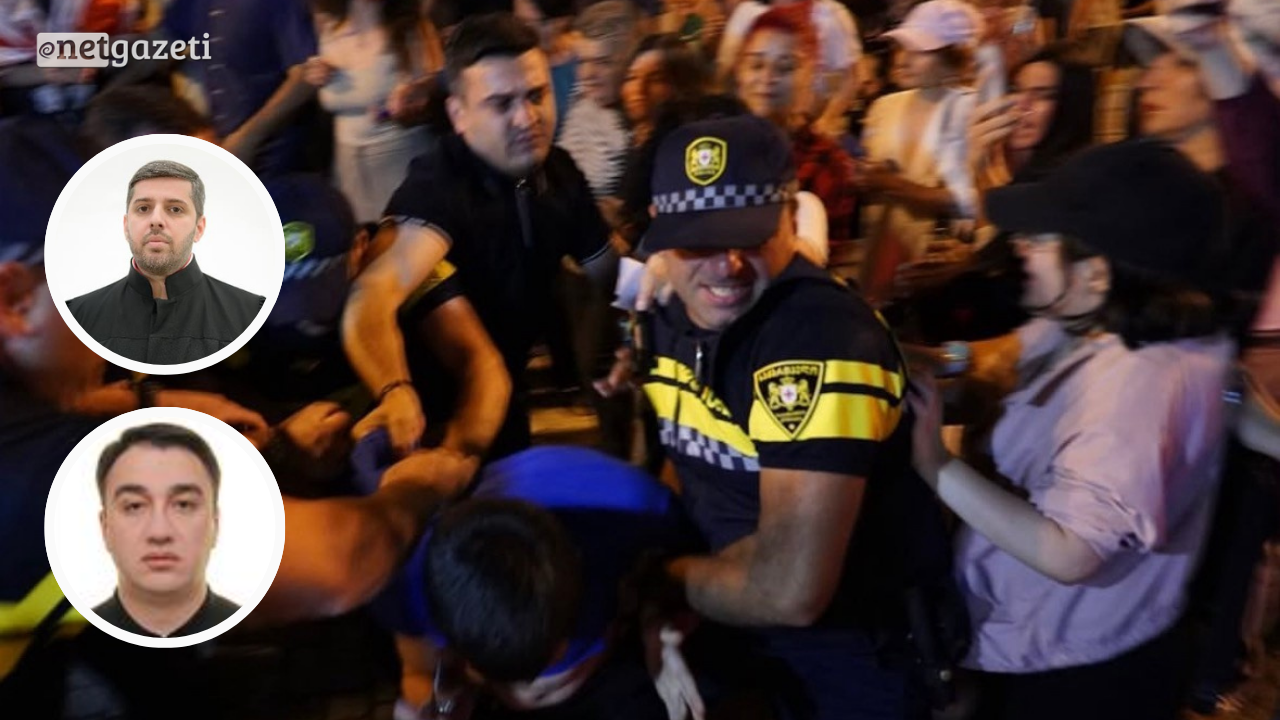
Prisoner of conscience Archil Museliantsi, who was arrested in connection with pro-European rallies and has reported police abuse and a forced confession, was sentenced to four years in prison. The decision was handed down by Judge Giorgi Arevadze. Notably, while in pre-trial detention, Museliantsi took the Unified National Exams and was admitted to a four-year bachelor’s degree program in law, mirroring the length of his sentence.
Before the verdict was announced, defense attorney Dimitri Vardiashvili delivered his closing statement, in which he questioned the conclusions of the prosecution’s forensic examination. He also drew attention to the fact that Museliantsi was initially detained under administrative procedure, but after the 48-hour detention period expired, he was charged under the Criminal Code. According to Vardiashvili, investigative actions were carried out before the formal charges were filed, and the case was “stitched together with white thread” [i.e., poorly fabricated].
Museliantsi was charged under Article 187, Part 2 of the Criminal Code, which concerns the damaging or destruction of another person’s property by means of arson, explosion, or other methods considered generally dangerous.
Prosecutor Ani Khubejishvili accused him of setting fire to surveillance camera cables on Rustaveli Avenue, near the Parliament building.
Back in December, shortly after Museliantsi was first placed in pre-trial detention, his lawyer told Netgazeti that police officers had beaten him and tried to force him to name opposition politicians as the ones who incited him and gave him orders.
“This man has no wife, no children, no parents — he has nobody at all in the world. In the end, it turned out they couldn’t use him for the purpose they wanted … Maybe they wouldn’t even have prosecuted him if they had managed to achieve their goal and then released him. But as practice shows, if he had gone along with what they demanded, he would have still been left in prison, and on top of that, his testimony would have been used against some party leaders. That was the only reason he was arrested. Nothing more,” Dimitri Vardiashvili said in the first months of Archil Museliants’ detention.
“The prosecutor claims that the [protocol] signatures were voluntary. But after what I went through, God forbid — you wouldn’t just sign, you’d even confess to Kennedy’s assassination,” Archil Museliantsi told the prosecutor.
He has repeatedly stated that he was subjected to violence and pressure after his arrest.
Museliantsi also pointed to violence and falsification of case materials in his closing statement.
“As for the signatures on the protocols, I confirm that they are indeed mine. With those signatures, they got exactly what they wanted. I wasn’t a lawyer, but I did know that these testimonies would have no legal force in court. I signed just so they would leave me alone. Another key piece of evidence that doesn’t exist — where are the clothes? Every place I set foot in was searched. When Levan Chkhikvadze couldn’t find a way out, he wrote down that Archil Museliantsi himself had said he burned his clothes… Apparently, I was walking around Rustaveli naked. From 6 p.m. on November 29 until 3 a.m. on November 30, before I was arrested, I was on Rustaveli Avenue wearing the same clothes that were put into evidence. But the top I was wearing — the one stained with blood — wasn’t included, because the blood came from the beating I endured. As for the torture and abuse I went through, I won’t go into detail again, since I’ve already explained how they obtained my signatures, how they blackmailed me, threatened me, and intimidated me,” said Archil Museliants.
“I want to sincerely thank everyone for standing by me during this difficult stage of my life.
I am writing this letter in advance because I know I will be sentenced. They will fulfil this order regardless.
As for my feelings about future imprisonment, I can tell you that I do not worried at all, because the country and its future are at stake. Even if I am sentenced to six years, I am ready to serve this unjust punishment because for me, the homeland is dignity.
I ask only one thing — fight!
Imagine what Georgia would be like if General Mazniashvili had surrendered?
And Ilia Chavchavadze?
What kind of Georgia would there be without the struggle of Zviad Gamsakhurdia and Merab Kostava?
How would we live in Georgia if it weren’t for the spirit of the heroes of Shindisi?
And what would Georgia be like without Giorgi Antsukhelidze?
They fought for a beautiful, happy, and independent Georgia. We fight for the same, and we will achieve it. We can do it!
I love every one of you. I am proud of every one of you. Take care of each other, love each other — the homeland is love. The homeland is each one of you.
We will meet at Rustaveli — there we will celebrate victory, where it all began,” – reads the letter written by Archil Museliantsi. At the end of the letter, the Georgian flag is drawn.

What is Happening in Georgia
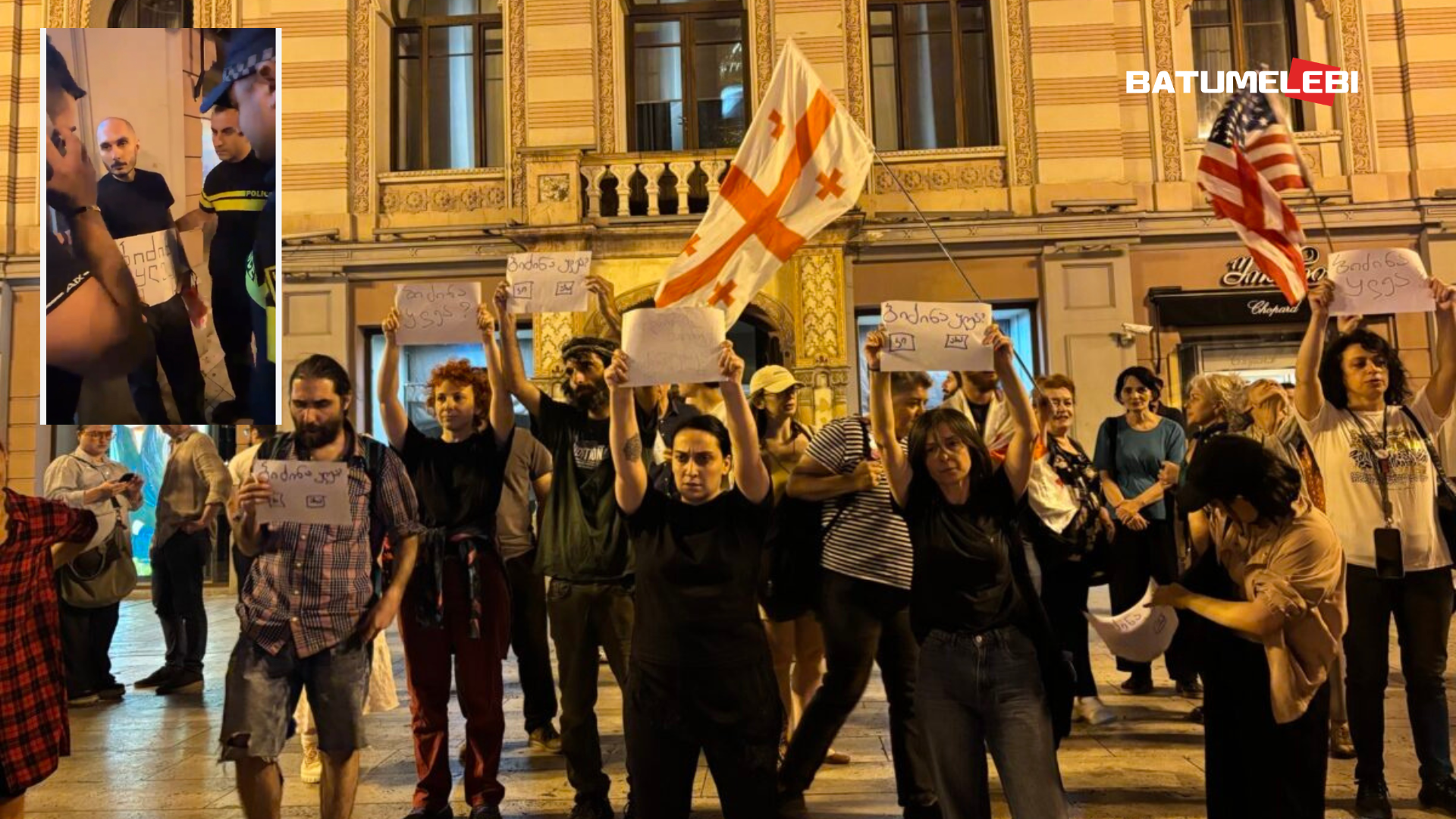
In late fall 2024 and the beginning of winter, massive daily protests erupted across Georgia. The demonstrations were sparked by the ruling Georgian Dream party’s November 28 announcement to “postpone” the country’s EU integration bid until the end of 2028.
By that time, the ruling party had already been accused of massive electoral fraud during the October 26, 2024 parliamentary elections and of unconstitutionally forming a parliament boycotted by all opposition parties. The one-party parliament then proceeded to elect the government and appoint the president — all widely regarded as Georgian Dream-appointed, underscoring their perceived illegitimacy.
The protests, often referred to as the “Georgia Protests,” were met with violent crackdowns. Numerous journalists and citizens sustained physical injuries, and hundreds reported inhumane treatment at the hands of police and in detention, including cases amounting to torture. Journalists were attacked by uniformed, unidentified law enforcement officers during live broadcasts — none of which have been investigated.
Amidst police impunity and tightening repressive legislation, over 60 people have been jailed on criminal charges widely viewed as trumped-up and politically motivated attempts to silence dissent.
Since the late spring of 2025, eight opposition leaders were jailed for refusing to participate in a parliamentary commission purportedly formed to investigate crimes committed by the previous government, which left office in 2012. This commission has been widely criticized as a tool aimed at banning opposition parties. Notably, most opposition leaders summoned had never held high-ranking positions during the previous government’s rule, reinforcing suspicions that the commission’s true goal is to suppress the current opposition rather than investigate past crimes.
One of the main opposition figures, Giorgi Gakharia — who previously served as Interior Minister and Prime Minister under Georgian Dream — has been abroad “on an international business trip” since June, 2025. Meanwhile, an investigation is underway into his role in opening a checkpoint during his tenure as Interior Minister. The investigation involves criminal charges including sabotage, attempted sabotage under aggravating circumstances, aiding hostile activities on behalf of a foreign organization or one under foreign control, and mobilizing funds for actions directed against Georgia’s constitutional order and national security.
These are serious charges that carry potential prison sentences ranging from 7 to 15 years.